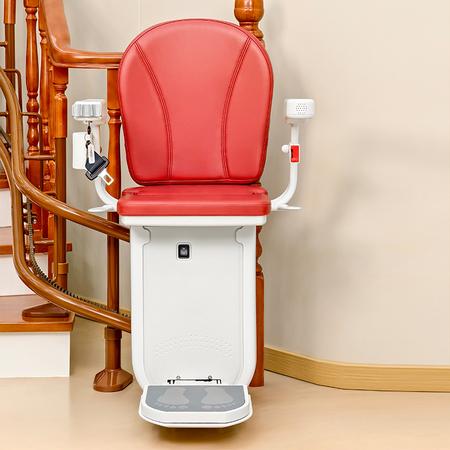
As family members grow older, simple daily tasks like climbing stairs can turn into risky, tiring challenges. Many seniors want to stay in their familiar homes instead of moving to assisted living facilities, but stair-related falls and mobility limitations often ruin their comfort and independence. If you’re looking for a practical, long-term solution to make your house safer for elderly residents, a chair elevator is one of the most worthy home upgrades you can consider. It eliminates stair-climbing struggles, reduces fall risks, and lets seniors enjoy full access to every floor of their home with zero stress.
What Is a Chair Elevator for Home Use?
A residential chair elevator is a compact, motorized mobility device designed specifically for indoor staircases and multi-story family homes. Unlike bulky commercial elevators that require major construction, this equipment is tailored for household use, featuring a simple chair mounted on a stable track system fixed along stair rails or walls. It runs smoothly up and down stairs at a slow, safe speed, allowing seniors with limited leg strength, joint pain, or balance issues to travel between floors independently.
Many people confuse chair elevators with traditional stair lifts, but modern chair elevator models integrate upgraded safety systems, quieter motors, and more user-friendly controls. It is a core accessibility facility for building standard senior-friendly homes, suitable for aging adults, post-surgery recovery patients, and residents with mild mobility impairments.
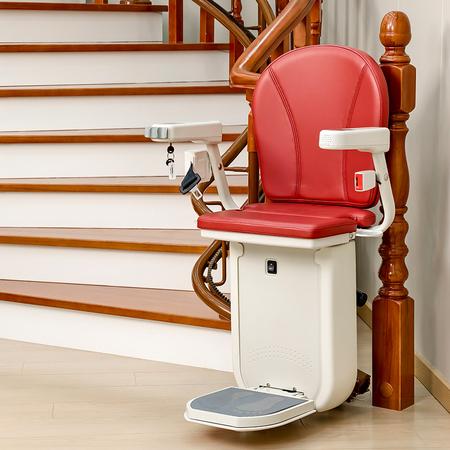
Core Technical Parameters of Standard Home Chair Elevators
To ensure safety and practicality, formal home chair elevators follow unified industry standards. The verified parameters below are adopted by mainstream home mobility equipment manufacturers, supporting stable and long-term household use.
|
Technical Item
|
Standard Specification
|
Practical Advantage
|
|---|---|---|
|
Max Load Capacity
|
150kg (330lbs)
|
Suitable for most adult seniors, stable bearing without shaking
|
|
Lifting Speed
|
60mm/s (3.6m/min)
|
Low-speed operation to avoid dizziness and ensure safety
|
|
Power Supply & Standby
|
26.6AH battery, 120+ mins standby
|
Normal use during short power outages, uninterrupted travel
|
|
Safety Protection
|
Emergency stop, anti-collision sensor, brake lock
|
Automatic stop when encountering obstacles, prevent falls
|
|
Operating Mode
|
Button + wireless remote control
|
One-touch operation, no complicated steps for seniors
|
These standardized parameters ensure that a qualified chair elevator can adapt to most family stair structures, providing stable, safe, and comfortable travel experience for elderly users.
Key Benefits of Installing a Chair Elevator in Senior-Friendly Homes
Maximizes Senior Independence at Home
The biggest advantage of installing a chair elevator is helping seniors maintain independent living ability. Many elderly people refuse to climb stairs not only because of physical fatigue but also fear of falling and causing secondary injuries. With this device, they can freely go upstairs and downstairs alone without relying on family caregivers. Whether it’s going to the second-floor bedroom for rest or the first-floor living room for activities, seniors can control their own schedule, greatly improving their sense of self-worth and living comfort.
Reduces Household Safety Hazards
Stair falls are one of the top causes of elderly home injuries every year. For families with elderly members, hidden dangers exist every time they climb stairs, especially for seniors with arthritis, poor balance, or slow reaction speed. The chair elevator solves this problem fundamentally. Its multiple safety protection mechanisms, including anti-collision sensors and automatic brake locks, can stop operation immediately in case of unexpected situations, effectively avoiding fall accidents and reducing family safety concerns.
Low Transformation Cost and High Practicality
Compared with renovating home structures or installing large-scale home elevators, chair elevator installation requires minimal construction and does not damage the original stair and wall structure of the house. The equipment is compact in size, does not occupy extra living space, and has low daily maintenance costs. It is a cost-effective aging-in-place transformation solution, suitable for ordinary family homes, villas, and duplex apartments.
Common FAQs About Home Chair Elevators
Is a chair elevator suitable for all stair types?
Most standard chair elevators adapt to straight indoor stairs, which cover more than 80% of household stair structures. For curved stairs or ultra-narrow stairs, customized track solutions are available from professional manufacturers. Professional on-site measurement is required before installation to ensure full fit with the home stair environment.
Can the chair elevator work during power outages?
Formal household chair elevators are equipped with built-in high-capacity backup batteries. As shown in the parameter table, the mainstream 26.6AH battery supports more than 120 minutes of standby and continuous operation, which can fully cope with sudden short-term power outages and ensure users can complete floor conversion safely.
Is the chair elevator difficult for seniors to operate?
No. Home chair elevators are designed for elderly users with simplified operation logic. They support one-touch button control and wireless remote control, with no complex settings. The equipment runs stably at a constant low speed, and seniors can master the operation method after a simple demonstration, which is very friendly for the elderly with poor learning ability.
How long is the service life of a household chair elevator?
High-quality chair elevators adopt alloy steel frames and brushless silent motors, with low failure rates. With regular simple maintenance (cleaning the track, checking battery status), the service life can reach 8–12 years, meeting the long-term aging-in-place needs of seniors.