
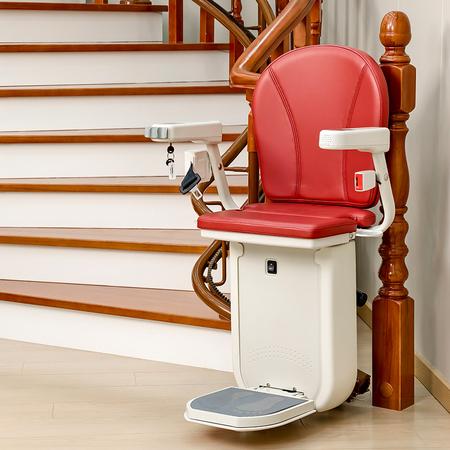
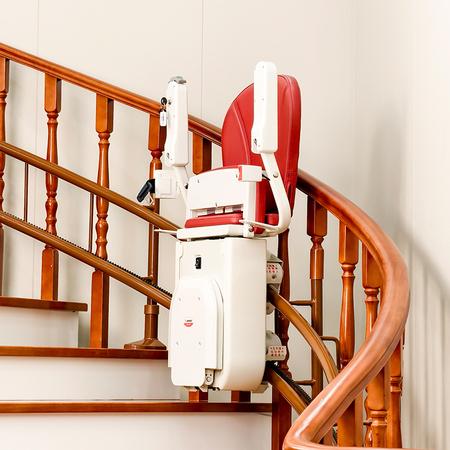
For families and public facilities that need barrier-free mobility solutions, safety is always the top priority when choosing lifting equipment. Many users only focus on basic lifting functions but ignore hidden safety hazards caused by insufficient device configuration. A fully protected chair lift can completely avoid common risks such as slipping, stalling and collision during use, bringing stable and safe travel experience for users with limited mobility.
Essential Core Safety Features of a Standard Chair Lift
Stair lifting equipment serves special groups including the elderly, the disabled and injured people, so its safety design is strictly regulated by international industry standards such as ASME A18.1 and EN 81-41. Unlike ordinary civilian lifting devices, professional chair lift products adopt redundant safety design in mechanical structure, electrical control and intelligent sensing. Every core safety feature is designed to respond to sudden abnormal conditions and prevent accidental injuries during operation.
A truly reliable barrier-free lifting device does not rely on single braking protection. It integrates mechanical passive safety, electrical active protection and intelligent sensing monitoring to form a multi-layer safety barrier. This comprehensive configuration ensures that the equipment can automatically respond and stop safely no matter emergency power failure, obstacle collision or overspeed sliding occurs.
Industry Standard Safety Technical Parameters for Reference
All qualified barrier-free lifting equipment must comply with unified industry safety specifications. The following standardized parameters are formulated based on mainstream international safety standards, covering operating limits and safety performance indicators, which can effectively verify the reliability of equipment safety configuration.
|
Safety Technical Index
|
Standard Parameter Value
|
Safety Protection Significance
|
|---|---|---|
|
Maximum Operating Speed
|
≤0.15 m/s
|
Low-speed operation ensures sufficient response time for emergency braking
|
|
Maximum Allowable Track Inclination
|
≤75°
|
Prevent excessive inclination from causing unstable body posture and sliding risks
|
|
Rated Safety Load
|
120kg – 150kg
|
Meet the bearing needs of most users with limited mobility
|
|
Static Safety Factor
|
≥6 times
|
Ensure structural stability under overload and long-term operation
|
|
Emergency Stop Response Time
|
≤0.2s
|
Quickly cut off power and lock the device to avoid accidents
|
Key Safety Features That Determine Equipment Reliability
1. Dual Redundant Braking System
The braking system is the most critical safety component of lifting equipment. High-standard products are equipped with dual braking structures including service brake and emergency safety gear. During normal operation, the service brake performs stable speed regulation and parking. Once power failure, equipment overspeed or sliding occurs, the mechanical safety gear will lock the track instantly. This passive mechanical protection mode does not rely on electric power, which can effectively prevent free sliding of the equipment and eliminate falling risks.
2. Intelligent Obstacle Detection Sensors
Unexpected obstacles on stair treads are one of the common causes of equipment failure and user injury. Reliable devices are fitted with high-sensitivity contact and infrared sensing probes at the bottom and operating ends. When the chair lift detects foreign objects blocking the operating path, it will trigger an automatic emergency stop immediately. This feature avoids equipment collision damage and prevents users from being jolted or injured by sudden resistance during operation.
3. Power Failure Automatic Lock Protection
Sudden power cuts are unavoidable in daily use. Ordinary lifting equipment may slide down due to gravity after power failure, bringing great safety risks. Standard safety configuration includes power-off self-locking function. Once the power supply is interrupted, the equipment will automatically lock the operating structure in place, keep the chair stable and stationary, and will not displace or slide, protecting user safety in sudden power failure scenarios.
4. Complete User Restraint and Anti-Slip Design
For users with unbalanced body coordination, stable sitting posture protection is essential. Qualified products are equipped with safety belts, anti-slip seat surfaces and stable armrest structures. The ergonomic seat inclination and anti-slip texture can prevent users from sliding sideways during lifting and lowering. The firm armrest configuration also provides stable support, effectively avoiding posture deviation and accidental falling during equipment operation.
5. Overload and Overheating Automatic Protection
Long-term overload operation and motor overheating will cause equipment aging and functional failure. Professional safety configuration integrates overload detection and overheating protection programs. When the load exceeds the rated standard or the motor temperature is too high after long-time operation, the system will automatically stop running and lock the operation authority. This design avoids equipment damage caused by abnormal working conditions and eliminates potential safety hazards of equipment failure.
FAQs About Chair Lift Safety Configuration
1. Why is dual braking system a mandatory safety configuration?
Single electric braking relies on power supply and control circuits, which may fail in extreme conditions such as power failure and circuit damage. The dual braking system combines electric service brake and mechanical safety gear. The mechanical structure can still achieve reliable locking without power support, forming a fail-safe protection mechanism and avoiding sliding accidents.
2. Do obstacle sensors affect the normal operation of the equipment?
High-sensitivity sensors only trigger emergency stop when real obstacles block the path, and will not cause false stops due to minor environmental changes. This intelligent sensing design does not affect normal operating efficiency, but can actively avoid collision risks, which is an indispensable safety configuration for home and public stair lifting equipment.
3. Is overload protection necessary for daily household use?
Yes, it is a basic safety guarantee. Overload will increase the operating load of the motor and transmission structure, causing accelerated wear, structural deformation or motor burnout. The overload protection function can cut off operation in time to prevent long-term damage to the equipment and avoid safety accidents caused by structural failure during subsequent use.
4. What safety details should be checked regularly in daily maintenance?
Daily inspection should focus on braking sensitivity, sensor response status, safety belt firmness and power-off self-locking function. Regularly clean the sensor probe to avoid dust blockage, and test emergency stop and locking functions to ensure all safety features can work normally when needed.