
Modern inclined platform lifts are engineered with layered protection, so one failure will not lead to a dangerous situation. Manufacturers follow widely accepted accessibility and machinery safety codes, including ASME A18.1 and ISO 9386-2. These standards set clear rules for load limits, speed, braking systems, sensor behaviour and emergency controls.
The table below shows typical working parameters for a standard residential inclined wheelchair lift for stairs. These figures are useful for comparing options and setting realistic expectations.
| Parameter | Standard Residential Value | Notes |
|---|---|---|
| Rated load capacity | 250 kg (550 lbs) | Covers user plus wheelchair weight |
| Operating speed | 4–5 m/min | Slow, controlled travel speed |
| Maximum stair angle | 45 degrees | Works for most common straight staircases |
| Platform size | 1100 mm × 800 mm | Fits most manual and power wheelchairs |
| Power backup | Battery emergency lowering | Functions if main power fails |
| Folded depth | Under 350 mm | Leaves usable stair space when parked |
One of the most important safety parts is the obstruction sensor. If the platform touches a box, shoe, pet or any object on the stair path, the lift stops immediately. It will not keep pushing forward. Automatic safety arms or side flaps lock into place before movement starts, so the wheelchair cannot roll off the platform. The deck surface is textured and non-slip, even when slightly damp. An emergency stop button sits where the user or caregiver can reach it easily, and overspeed protection triggers the brake if the unit moves faster than its set limit.
It is worth noting that these safety features only work if the lift stays within its rated load and stair angle. Overloading or fitting it to a stair layout outside the design range removes much of that protection.
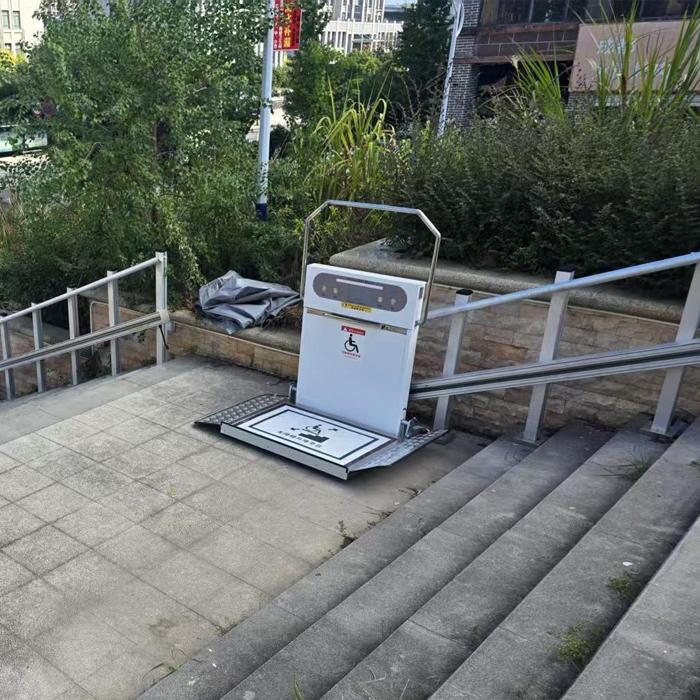
Installation And Inspection Matter More Than Most People Think
Even the best-designed lift can become unsafe if it is mounted incorrectly. The rail must be fixed firmly to the stair structure or wall, with fixings sized for the local building code. The landing zones must be clear, level and free of trip hazards. That is why professional site assessment is a required step before installation.
After installation, the unit should pass a full commissioning test. The technician checks all sensors, brakes, emergency lowering, limit switches and control stations. A written record of the test should be kept on file. For commercial buildings, many local authorities require periodic third-party inspections, while home users still benefit from a yearly service visit.
Many safety incidents are not caused by manufacturing defects. They happen when people skip maintenance. Dust, worn rollers, loose wiring or slow sensor response can develop quietly over months. A routine service catches these small issues before they become dangerous.
Frequently Asked Questions About Safety
Can the lift still work if the power goes out?
Most certified models include battery-backed emergency lowering. When mains power is lost, the user or caregiver can activate a controlled slow descent to the nearest landing. It does not drop freely. This feature is a key requirement for many safety standards.
Can children or untrained people operate it by accident?
Good units use key switches or locked call stations. This stops random activation. Caregivers should still teach household rules, especially for younger children. The lift is mobility equipment, not a toy.
Is it safe for outdoor stairs?
Only models rated for outdoor use are suitable. Outdoor versions have sealed electronics, corrosion-resistant rails and weatherproof sensors. An indoor-only lift will develop faults quickly in rain, frost or high humidity, and that creates safety risk.
What maintenance tasks keep the lift safe?
Routine work includes sensor cleaning, brake testing, rail lubrication, connection tightening and battery health checks. Follow the service schedule provided by the manufacturer, and stop using the lift right away if it makes strange noises, hesitates or fails to stop at obstacles.