
Most people do not think about their stairs until the day they become a problem. Maybe your knee started complaining, or your mother can no longer manage the second floor, or you simply watched someone struggle and thought, this should not be this hard. If any of that sounds familiar, a seat lift is usually the first sensible answer. It is smaller, quieter, and cheaper than a full platform unit, and it fits right onto the staircase you already have.
But here is the catch: not every seat lift is built the same. Pick the wrong one and you end up with a device that is too slow, too loud, or simply too weak for your needs. This article walks you through the details that actually matter, so you can make a choice you will still be happy with in five years.
What Exactly Counts as a Seat Lift?
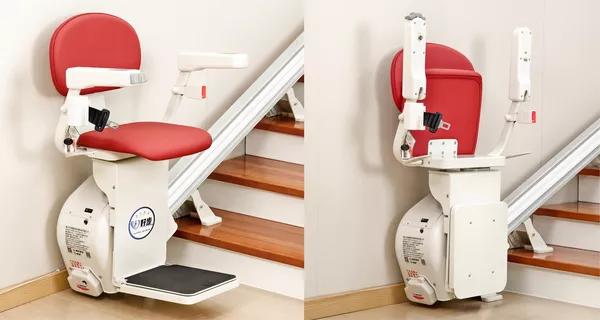
A seat lift is a motorized chair that travels along a rail mounted on the staircase. You sit down, fasten the belt, press the button, and the chair carries you up or down while the stairs stay fully usable for everyone else. It is lighter and takes up less space than a platform lift, because the user sits in the small seat rather than staying in a wheelchair.
That makes a seat lift the right fit for people who can walk short distances and can transfer easily into a seat, but who find a full flight of stairs too tiring, painful, or risky. For anyone who needs to remain in the wheelchair, a platform unit is the better route instead.
Why a Seat Lift Beats Climbing for Many Families
For many older adults, the danger is not the climb itself, but the moments around it. Turning around on the landing, carrying something in one hand, or taking a step backward without looking. A seat lift removes most of that risk because the person is seated and strapped in for the whole trip.
There is also a softer benefit that people rarely talk about. A seat lift lets someone keep living in the home they already love, instead of moving, downsizing, or relying on family every single time. That independence is often worth more than the price tag.
Key Specifications to Compare Before You Decide
Before you compare brands, compare numbers. These are the figures that separate a dependable seat lift from one you will regret.
| Specification | Typical Range | Why It Matters |
|---|---|---|
| Safe Working Load | 120 – 160 kg | Must comfortably carry the user plus anything they hold |
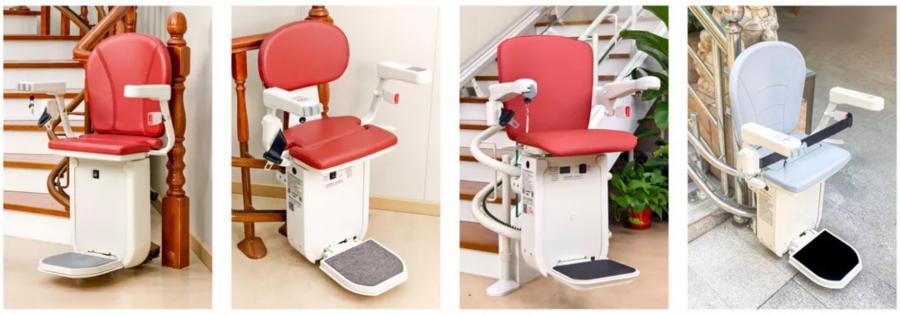
| Rail Type | Straight / Curved / Turn | Curved rails handle L-shaped and U-shaped staircases |
| Max Travel Height | 6 – 15 m | Sets the limit for taller homes and extra floors |
| Travel Speed | 0.12 – 0.18 m/s | Fast enough to be useful, slow enough to feel safe |
| Seat Comfort | Adjustable seat, swivel option | Swivel at the top makes getting off easier |
| Power Supply | 230V AC, battery backup | Battery backup keeps it working during a power cut |
| Safety Features | Seat belt, obstruction sensor, manual lower | Protect the user and anyone nearby |
| Noise Level | Under 55 dB | Quieter units disturb family life less |
Do not skip the load figure. It is the single most common reason a seat lift fails for its owner, because people forget to add the user’s weight to anything they might be carrying.
Safety Features That Actually Protect You
Reliability starts with safety, and safety starts with a few essentials. A seat belt is non-negotiable. An obstruction sensor that stops the chair if something blocks the rail is just as important. A manual lower function lets you bring the seat down even if the power fails. And a swivel seat at the top of the stairs means you turn away from the drop instead of backing toward it.
Each of these looks small on a spec sheet, but together they decide whether the ride feels calm or whether every trip leaves you holding your breath.
Installation, Space, and What It Really Costs
One of the best things about a seat lift is that it does not replace your stairs. The rail fixes along the wall or the treads, and the seat folds up when not in use, so the staircase keeps working for everyone. Straight flights usually install in about a day; curved systems take a few days because the rail has to be shaped and fitted carefully.
Budget-wise, a seat lift sits below a platform lift in cost, which is exactly why so many families start here. Running costs stay low, but a professional service once a year is a sensible habit. Regular checks on the rail, the drive unit, and the sensors will catch small problems early.
Frequently Asked Questions
1. Can a seat lift be fitted to any staircase?
Most domestic staircases can take one. Straight flights are the simplest, and curved or turning staircases are handled with shaped rails. A site measurement is the only honest way to confirm.
2. How long does installation take?
A straight flight usually takes about a day. Curved or turning staircases can take several days because the rail must be carefully shaped and fitted.
3. What happens if the power goes out?
Most models include a battery backup and a manual lower function, so the seat can still be brought down safely when the mains supply is off.
4. Is a seat lift suitable for someone who uses a wheelchair?
Not the best match. If the user needs to stay in the wheelchair, a platform lift is the right choice. A seat lift suits people who can sit and transfer easily but struggle with a full flight of stairs.
5. How much maintenance does it need?
A professional service once a year is usually enough. Daily checks are simple: keep the rail clean and confirm the safety sensors respond.
A Practical Way to Decide
Here is the honest way to think about it. A seat lift is not about flashy features. It is about making a flight of stairs boring again, so ordinary, safe, and expected that nobody thinks twice about it.
Measure your staircase, write down the weight you actually need to carry, and compare the numbers above rather than the marketing page. If a figure feels unclear, ask the installer to confirm it on site before you commit. A little homework now tends to save a lot of regret later.