
If you supply accessibility equipment or manage building renovation projects, safety is always your top priority. Complex curved stair structures bring unique installation challenges, and small operational errors can lead to big safety risks. Learning standardized installation and operating rules helps equipment suppliers and project managers avoid safety accidents and meet international accessibility codes. A properly installed and maintained wheelchair lift for curved stairs delivers reliable barrier-free access for elders and people with limited mobility.
Professional Safety Guide for Installing and Operating Curved Stair Lifts
1. Why Safety Standards Matter for Curved Stair Accessibility Equipment
Curved staircases are common in villas, old buildings, commercial centers and luxury public facilities. Unlike straight stairs, their irregular radian, variable slope and special structural design make accessibility equipment installation far more complicated. Ordinary straight stair lifts cannot adapt to curved track structures, and non-standard installation will cause jitter, deviation or even structural failure during operation.
For equipment suppliers, engineering contractors and facility operators, safety compliance is the core of project acceptance and long-term service. Unqualified installation not only fails to pass official inspections, but also brings hidden dangers for daily users. Following unified safety specifications can greatly reduce equipment failure rates and improve public usage trust.
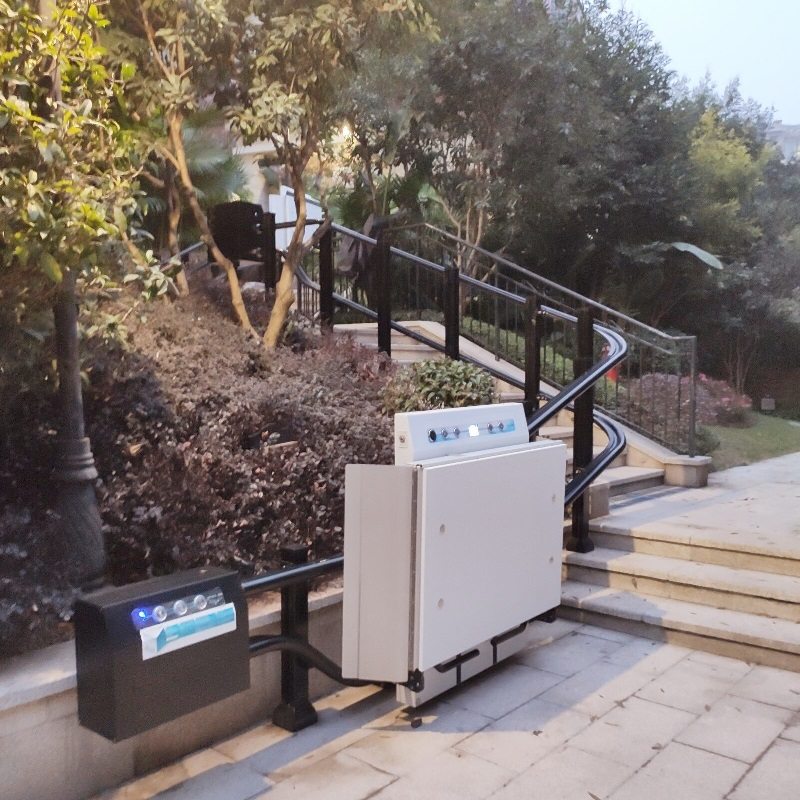
2. Key Safety Installation Tips for Curved Stair Lifts
2.1 On-site Survey and Structural Adaptation Inspection
Before any installation construction, a complete on-site survey is indispensable. Construction teams must record the stair radian, step height, wall structure and available installation space accurately. Different curved stairs have unique bending angles, which require customized track cutting and positioning plans.
Staff should check wall firmness and load-bearing capacity to ensure the mounting base can sustain long-term dynamic load. Skipping detailed survey often leads to track inclination, unstable fixation and potential safety hazards after equipment delivery.
2.2 Standard Track Installation and Level Calibration
The track is the core guiding component of stair lifting equipment. During installation, workers must strictly follow design drawings to fix track supports at equal intervals. All connection screws and locking parts need secondary reinforcement to prevent loosening caused by long-term mechanical vibration.
Level calibration is another critical step. Unlevel tracks will cause tilting during lifting, resulting in abnormal noise, operational jitter or sensor alarm. Professional installation teams will use precision measuring tools to ensure the whole track operates smoothly without stuck points.
2.3 Electrical Wiring and Safety Device Debugging
Electrical system safety determines the overall operational stability. All wiring work needs standardized threading and fixation to avoid wire extrusion, abrasion and short circuit risks. Waterproof and dustproof measures must be done well for indoor and semi-outdoor installation environments.
Meanwhile, safety auxiliary devices including emergency stop buttons, anti-collision sensors, overspeed protection and limit switches need full function debugging. These devices serve as the last safety barrier to prevent accidental falling or equipment overload.
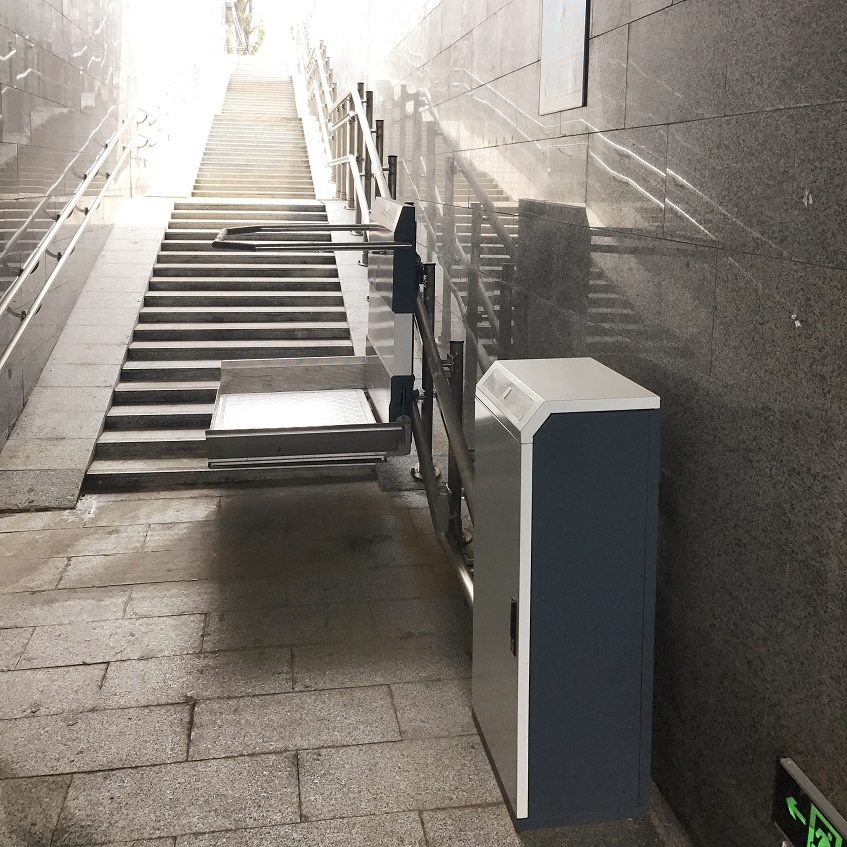
3. Daily Operational Safety Rules and Maintenance Tips
3.1 Standard Operating Specifications
Daily operators should receive professional training before using the equipment. It is forbidden to overload the platform or place unevenly distributed goods and personnel. During operation, users need to keep stable posture and avoid shaking the equipment artificially.
When encountering abnormal noise, slight jitter or sensor triggering, operators must stop using the equipment immediately instead of forcing operation, which may expand minor faults into major safety failures.
3.2 Regular Inspection and Routine Maintenance
Long-term stable operation relies on regular maintenance. The maintenance team should periodically check screw tightness, track smoothness, lubrication status and sensor sensitivity. Timely cleaning of track dust and residual sundries can effectively avoid operational jamming.
In addition, electrical systems and battery performance need regular testing to ensure emergency power supply can work normally in case of sudden power failure. Scientific maintenance can greatly extend equipment service life and keep long-term safe operation.
4. Common Safety Mistakes to Avoid
Many safety risks come from irregular construction and careless daily use. Some construction teams simplify survey procedures to save time, resulting in mismatched track radian and poor equipment fit. In daily use, many users ignore load limits and emergency protocols, causing unnecessary mechanical wear and safety hazards.
Another common mistake is neglecting seasonal inspection. Humid environments may cause metal parts rust and circuit damp failure, while dry seasons lead to insufficient lubrication. Targeted seasonal maintenance can effectively avoid seasonal equipment failure.
5. Frequently Asked Questions
Q1: What safety standards should curved stair lifting equipment meet?
Qualified accessibility lifting equipment needs to meet international barrier-free safety codes, including load capacity standards, anti-fall protection, emergency stop function and stable track structure. All installed devices must pass professional safety acceptance before official operation.
Q2: Is customized installation necessary for curved stairs?
Yes. Since no two curved stair structures are exactly the same, standardized general tracks cannot fit perfectly. Customized installation according to on-site radian and size is the premise of stable and safe operation.
Q3: How often should stair lift equipment be maintained?
For commercial and public facilities, monthly routine inspection and quarterly professional maintenance are recommended. High-frequency usage scenarios need enhanced inspection frequency to eliminate hidden dangers in advance.
Q4: What should be done during sudden power failure?
Qualified lifting equipment is equipped with emergency manual descending and standby power devices. Operators can start the emergency system to safely land the platform and avoid personnel trapping risks.
To sum up, installation standardization and standardized operation are the core of safe use of curved stair accessibility equipment. Strictly following safety guidelines can effectively avoid engineering risks, reduce maintenance costs and ensure user safety. Choosing a well-configured and correctly installed wheelchair lift for curved stairs helps property managers and engineering contractors provide compliant, reliable barrier-free access services for public and private buildings.