
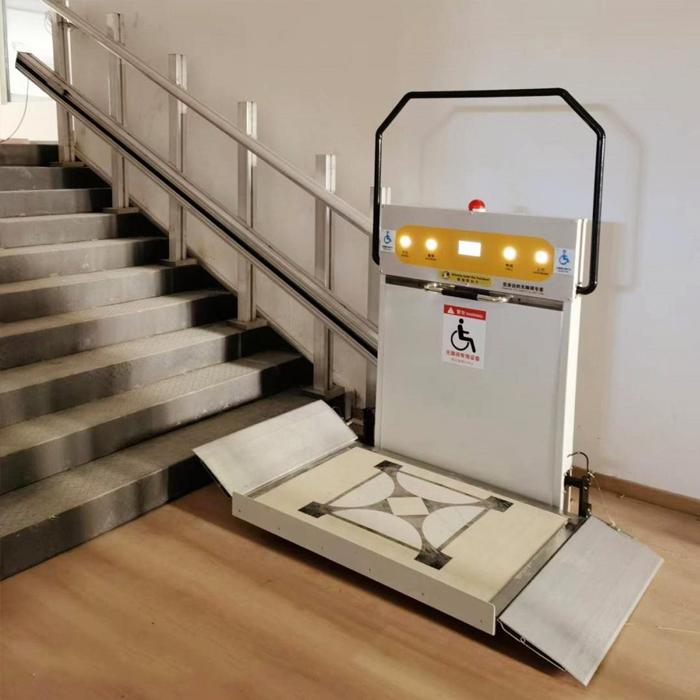
A wheelchair elevator serves vulnerable users who rely entirely on equipment stability during vertical transportation. Unlike regular passenger elevators, these accessibility lifts operate at lower speeds and serve barrier-free scenarios, yet they face stricter safety testing requirements. Every structural design, braking system and emergency function must pass standardized inspections to avoid trapping, falling or tipping accidents.
Formal safety certifications are not just paper qualifications. They represent third-party verified proof of product stability, load capacity and emergency response performance. A certified wheelchair elevator strictly follows global accessibility manufacturing standards, ensuring safe operation in residential villas, shopping malls, hospitals and public barrier-free passages.
Core Safety Certifications & Industry Compliance Standards
Global accessibility equipment industries have formed unified certification systems to standardize product quality. The following mainstream certifications are recognized worldwide and serve as the core judgment basis for qualified barrier-free lifting equipment.
|
Certification Standard
|
Applicable Region
|
Core Inspection Content
|
Qualified Technical Parameters
|
|---|---|---|---|
|
CE EN 81-41
|
European Union, Global Export
|
Load stability, emergency stop, anti-fall protection, electrical safety
|
Rated load ≥250kg, automatic braking response ≤0.2s
|
|
ASME A18.1
|
North America, United States
|
Platform structural strength, running smoothness, safety sensor detection
|
Operating speed ≤0.15m/s, maximum tilt deviation ≤1.5°
|
|
ISO 9386-1
|
Global Universal Standard
|
Barrier-free accessibility performance, user safety protection system
|
Continuous cycle test ≥10000 times without failure
|
|
IEC 60204
|
Global Electrical Safety
|
Electric leakage protection, circuit stability, waterproof and dustproof performance
|
Insulation resistance ≥1MΩ, IP54 dustproof and waterproof grade
|
These standardized certification parameters cover mechanical structure, electrical system and safety protection performance, fully verifying the overall quality of barrier-free lifting equipment. Products without complete certification often have unqualified braking response and unstable load capacity, easily causing safety hazards in daily use.
Key Safety Performance Verified by Qualified Certifications
1. Anti-Fall and Emergency Braking System
Official safety certifications require all accessibility lifts to be equipped with dual anti-fall protection devices. When the equipment encounters power failure, circuit failure or abnormal sliding, the emergency braking system will lock the platform instantly. This core function effectively prevents sudden falling accidents and is the most basic safety guarantee for vertical lifting equipment.
2. Overload and Overcurrent Protection Mechanism
Certified products are equipped with intelligent overload detection systems. Once the load exceeds the rated standard, the equipment will automatically alarm and stop running to avoid structural deformation or motor burnout caused by overloading. Meanwhile, the overcurrent protection device can cut off the power supply in time to prevent electrical failures.
3. Safety Sensor and Anti-Collision Design
Standard-compliant products must be installed with bottom anti-collision sensors. When the platform encounters obstacles during descending, it will automatically stop to prevent equipment jamming and user injury. This humanized safety design is a mandatory inspection item for global barrier-free equipment certifications.
Practical Benefits of Certified Wheelchair Lifts
Many users tend to choose uncertified low-cost products to save procurement costs, which leads to frequent failures and even safety accidents in later use. Certified lifting equipment has stable performance and complete safety mechanisms, which can adapt to long-term frequent use in homes and public places.
In addition, fully certified products meet public facility acceptance standards, which is convenient for building safety inspection and daily standardized management. For families with elderly and disabled members, certified safety equipment can provide reliable barrier-free travel protection and eliminate hidden safety risks.
FAQs About Wheelchair Elevator Safety Certification
1. Are all wheelchair lifts required to pass CE certification?
CE EN 81-41 certification is a mandatory pass standard for exported and commercially used products. Household small lifts also need to meet this standard to ensure basic safety performance. Uncertified products cannot be used in public barrier-free projects.
2. What is the most critical certification for home installation?
ISO 9386-1 global barrier-free safety standard and IEC electrical safety certification are the core guarantees for household use. They ensure stable equipment operation, safe electrical performance and effective protection functions for long-term family daily use.
3. Can uncertified lifts pass building safety inspection?
No. Public and commercial building safety inspections strictly check product certification documents and test reports. Uncertified equipment does not meet industry standards and cannot pass formal acceptance and daily safety supervision.
4. Do certified products have a longer service life?
Yes. Certified products adopt standardized materials, structural design and production processes, with stable mechanical and electrical performance. The service life is significantly longer than that of uncertified assembled products, and the failure rate is greatly reduced.