
If you’re upgrading accessibility for schools, hospitals, shopping malls or government buildings, load compliance is the first thing you need to check before installing any lifting equipment. Many public facility managers mistakenly use residential-grade lifting devices for commercial scenarios, which leads to failed safety inspections and hidden operational risks. Understanding unified industry load standards ensures your accessibility renovation meets legal requirements and serves users safely for years. A qualified stair wheelchair lift must strictly follow international and regional commercial load specifications for public applications.
Why Public Buildings Require Strict Commercial Load Standards
Unlike private residential environments, public buildings feature high-frequency, unpredictable and diverse usage. These facilities serve countless visitors every day, including wheelchair users with different body weights, powered wheelchairs, and accompanying assistants. Residential lifting equipment is only designed for occasional family use and low load cycles, making it unable to withstand long-term intensive commercial operation.
Commercial load standards are formulated based on public safety risk assessment and long-cycle fatigue testing. They focus on dynamic load tolerance, overload protection and structural durability, rather than just static bearing capacity. Non-compliant equipment may suffer platform deformation, rail loosening or hydraulic failure under frequent overload and vibration. For public venues, standardized load parameters are the core baseline to avoid safety accidents and pass official accessibility audits.
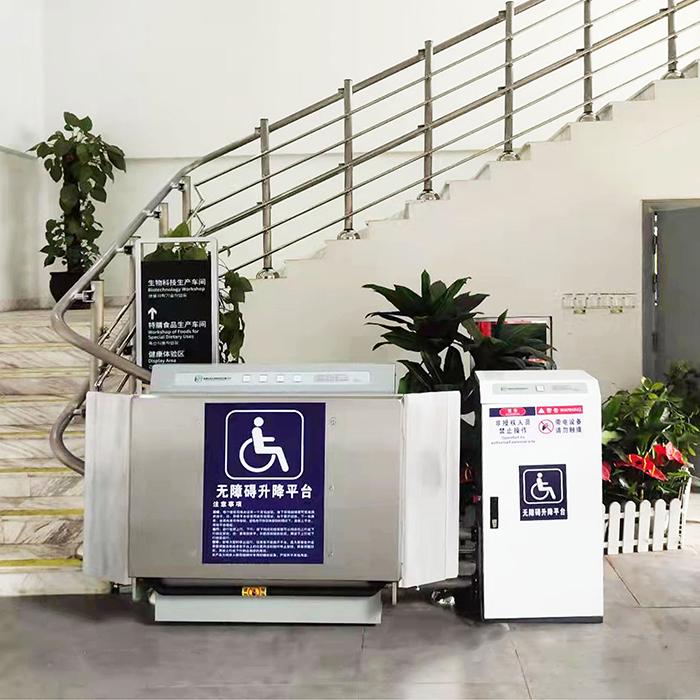
Official Load & Safety Parameter Standards for Public Building Lifts
Global mainstream accessibility specifications including EN 81-40, ISO 9386-2 and ASME A18.1 have unified clear load thresholds for commercial inclined lifting equipment. The following sorted parameters cover rated load, overload threshold, safety factor and applicable scenarios, fully matching public building installation requirements and providing reliable reference for engineering procurement and acceptance.
|
Certification Standard
|
Rated Commercial Load
|
Overload Protection Threshold
|
Minimum Safety Factor
|
Applicable Public Scenarios
|
|---|---|---|---|---|
|
EN 81-40 (EU Commercial)
|
250kg
|
125% rated load
|
4:1 structural safety ratio
|
Schools, offices, community buildings
|
|
ASME A18.1 (US Commercial)
|
272kg–340kg
|
120% rated load
|
5:1 structural safety ratio
|
Malls, hospitals, large public venues
|
|
ISO 9386-2 (Global General)
|
250kg minimum
|
125% rated load
|
4:1 structural safety ratio
|
All standard public accessibility projects
|
Core Load Compliance Rules for Public Installation
1. Distinguish Residential and Commercial Grade Load Ratings
Residential stair lifting devices usually adopt a 200kg–225kg rated load design, which is enough for daily family use. However, public buildings must eliminate residential-grade products. The minimum rated load for public venues is 250kg, covering the combined weight of a standard powered wheelchair and an adult user. Large crowded public spaces such as hospitals and transportation hubs need to upgrade to 340kg high-load models to reserve sufficient safety margin.
2. Mandatory Overload Protection Configuration
All commercial-grade lifting equipment for public use must be equipped with automatic overload detection and locking systems. Once the load exceeds 120%–125% of the rated standard, the device should trigger an alarm and stop operation immediately to prevent forced starting. This mechanism avoids structural fatigue damage caused by long-term overload operation and is a mandatory inspection item for public accessibility equipment.
3. Dynamic Load Tolerance for High-Frequency Use
Static load data cannot fully represent commercial safety performance. Public building equipment needs to bear frequent start-stop impact and uneven stress. Qualified products must pass cyclic dynamic load tests, ensuring stable operation under continuous high-frequency use without structural deformation. This dynamic tolerance standard is the key difference between commercial and civilian equipment.
4. Matching Structural Safety Factor
The safety factor refers to the multiple of ultimate bearing capacity relative to rated load. European standards require a minimum 4:1 ratio, while American commercial standards raise it to 5:1. A higher safety factor means stronger anti-risk ability and longer service life, which is more suitable for public facilities that require 24-hour stable accessibility services.
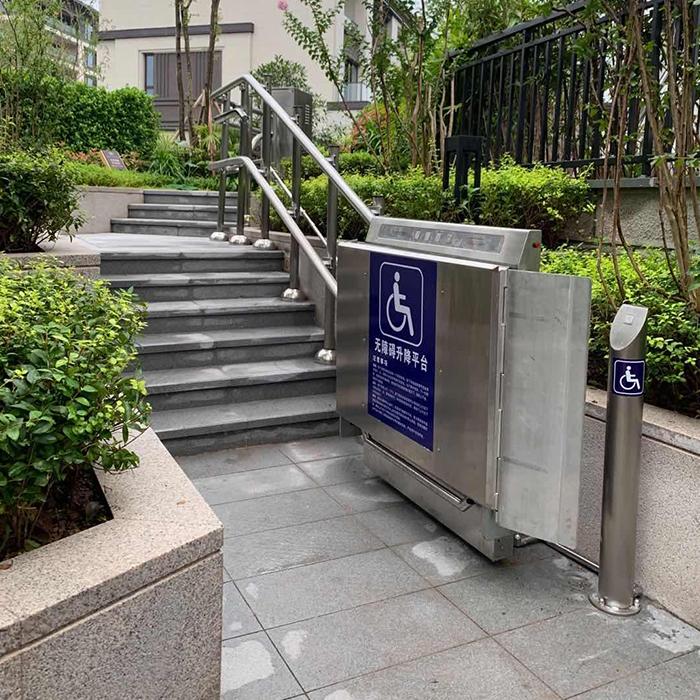
Frequently Asked Questions About Commercial Load Standards
Q1: Can residential load standard lifts be used temporarily in public buildings?
No. Residential load specifications and safety factors cannot adapt to high-frequency public use. Such installations will fail official safety assessments and bring potential structural failure risks. Public venues must deploy fully certified commercial-grade equipment that meets EN or ISO load standards.
Q2: Why do public lifts require higher safety factors than home models?
Public equipment faces uncertain user weight, frequent operation and unattended running status. A higher structural safety factor can resist accidental overload, vibration fatigue and long-term aging wear, maximizing public user safety and reducing equipment failure rates.
Q3: What happens if public lifts fail to meet load standards?
Non-compliant equipment will lead to accessibility project acceptance failure, forced equipment shutdown and rectification. In severe cases, structural deformation or falling accidents may occur due to insufficient bearing capacity, resulting in public safety liability risks.
Q4: Is 250kg rated load sufficient for most public scenarios?
Yes. The 250kg standard defined by EN and ISO covers most manual and powered wheelchairs plus adult users. For super-large wheelchairs or scenarios requiring attendant accompaniment, upgrading to 340kg high-load specifications is recommended to ensure full-scene safety.