
Why Load-Bearing Capacity Is the Core Selection Standard for Vehicle Lifts
Unlike fixed indoor accessibility equipment, vehicle-mounted lifting devices face dynamic and complex road conditions. During driving, braking, and bumpy road travel, the equipment will bear extra inertial pressure and vibration impact. A lift with insufficient load capacity may experience platform deformation, hydraulic system leakage, or structural loosening under dynamic load, greatly increasing safety hazards.
Commercial vehicles and vans usually undertake long-distance transportation and frequent passenger pick-up and drop-off tasks. Their service scenarios require higher equipment stability than household devices. A professional wheelchair lift customized for commercial vehicles can withstand long-term frequent use and dynamic load impact, ensuring stable lifting performance in various driving environments. Therefore, load-bearing parameters must be the first reference index in the selection process.
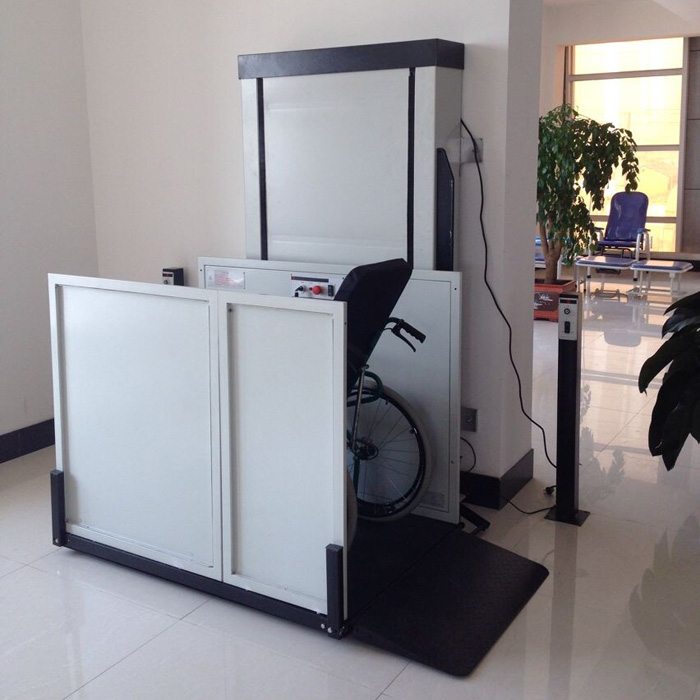
Standard Load-Bearing and Safety Parameters for Commercial Vehicle Lifts
To help fleet managers and equipment purchasers make accurate judgments, we have sorted out industry-standard load-bearing, size and safety parameters suitable for vans and commercial accessibility vehicles. These data comply with mainstream global traffic accessibility specifications and can be used as direct selection and acceptance standards.
|
Parameter Item
|
Commercial Grade Standard
|
Light Van Standard
|
Safety Function Requirement
|
|---|---|---|---|
|
Rated Load Capacity
|
350kg – 400kg
|
250kg – 300kg
|
Adapt to wheelchair + passenger total weight
|
|
Lifting Height Range
|
300mm – 1200mm
|
300mm – 900mm
|
Match different vehicle chassis heights
|
|
Rated Lifting Speed
|
40mm/s – 60mm/s
|
40mm/s – 60mm/s
|
Uniform and stable speed, no sudden jitter
|
|
Dynamic Load Tolerance
|
120% rated load
|
110% rated load
|
Resist road vibration and inertial impact
|
|
Working Temperature Range
|
-25℃ to 60℃
|
-20℃ to 55℃
|
Adapt to all-weather outdoor operation
|
Key Safety & Load-Bearing Selection Rules for Commercial Vehicles
1. Match Load Grade According to Usage Scenarios
For professional medical transport vehicles and large commercial shuttle vans, always choose heavy-duty models with a rated load above 350kg. These vehicles face high-frequency daily use and complex road conditions, and the high load margin can effectively avoid equipment fatigue damage. For small private vans and light-duty accessible vehicles, 250kg to 300kg standard models can meet daily travel needs and control installation costs reasonably.
2. Verify Complete Safety Protection Configurations
Safe load-bearing operation relies on complete safety systems. Formal commercial-grade lifting equipment must be equipped with anti-pinch protection, automatic platform balancing, emergency stop buttons, and hydraulic pressure self-locking devices. The self-locking function can fix the platform instantly once the hydraulic system fails, preventing sudden falling accidents. These safety configurations are mandatory for commercial vehicle modification and regular safety inspections.
3. Prioritize Certified and Industry-Verified Products
Many low-cost modified lifts on the market lack formal safety certification and dynamic load testing. Such products may work normally under static conditions but fail under bumpy road conditions and dynamic loads. It is necessary to select products with complete accessibility industry certifications and factory test reports, which can ensure long-term safe operation of the equipment and avoid hidden dangers for vehicle operation.
4. Reasonably Match Installation Space and Lifting Stroke
Load-bearing performance cannot be separated from installation matching. Excessively narrow installation space will lead to unreasonable force distribution of the equipment, causing local stress concentration and reducing actual load-bearing stability. Before purchasing, confirm the vehicle chassis height, tailgate space and internal installation size, and match the appropriate lifting stroke and platform size to ensure uniform force and stable lifting of the equipment.
Common FAQs About Commercial Vehicle Wheelchair Lift Selection
Q1: Is a higher load capacity always better for vehicle lifts?
Not exactly. Excessively high load models will increase equipment weight and vehicle energy consumption. The most reasonable choice is to match the load grade according to actual usage needs. Commercial transport vehicles prioritize high load margin, while household light vans can choose standard load models to balance safety and economy.
Q2: What risks will unqualified load-bearing equipment cause?
Lifts with insufficient dynamic load tolerance are prone to platform shaking, hydraulic oil leakage, and structural loosening during vehicle driving. In severe cases, it may cause platform tilt or falling, endangering the personal safety of disabled passengers. It will also lead to vehicle modification failure and inability to pass official safety inspections.
Q3: Do all van lift products adapt to all-weather outdoor use?
No. Light civilian models usually have a narrow temperature adaptation range and poor dust and water resistance. Professional commercial products adopt upgraded hydraulic seals and anti-corrosion structural materials, which can maintain stable load-bearing performance in high temperature, low temperature and rainy and snowy environments, suitable for long-term outdoor fleet operation.
Q4: How to judge whether the lift’s dynamic load performance is qualified?
You can refer to the factory dynamic load test data and certification reports. Qualified commercial equipment needs to withstand 110% to 120% overload cyclic testing to ensure that it can resist instantaneous impact and vibration during vehicle driving, rather than only meeting static load standards.