
Unlike standard industrial equipment, residential and public stair lifting devices are highly customized. Each building has unique stair parameters, especially in old communities, villas and public service buildings. Uniform equipment specifications cannot adapt to diverse on-site structures.
In bulk procurement and centralized installation projects, mismatched stair conditions will cause a series of problems. Narrow stairs may lead to equipment jamming and insufficient passing space; excessive stair slopes will exceed the safe operating angle; irregular turning structures will make rail laying impossible. These issues will cause batch rework, prolonged construction periods and increased engineering costs.
For B2B engineering teams, standardized site survey and precise parameter matching are the core keys to improving project qualification rate and controlling construction costs.
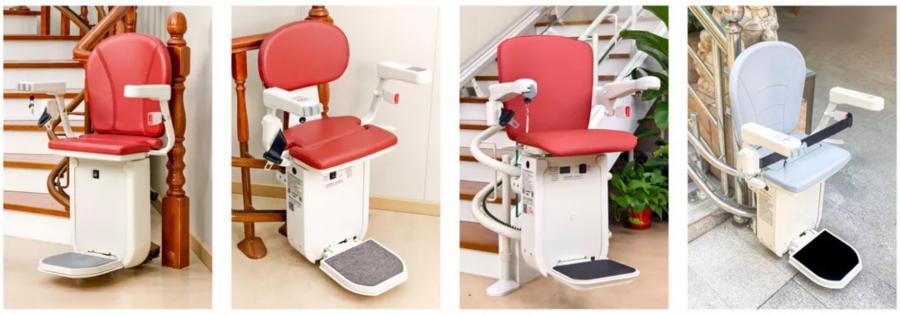
Standard Staircase Parameter Matching Reference Table
To help engineering teams complete rapid and accurate site evaluation, the following table summarizes industry universal stair condition matching standards. These clear data parameters can effectively avoid empirical judgment errors and guide bulk equipment selection.
|
Stair Condition Item
|
Adaptable Standard Range
|
Construction & Matching Notes
|
|---|---|---|
|
Effective Stair Width
|
≥750mm
|
Width below 750mm requires mini customized rail and compact seat structure
|
|
Stair Slope Angle
|
20°–45°
|
Excessively steep slopes need safety limit parameter adjustment
|
|
Straight Stair Length
|
≤15m single straight track
|
Ultra-long stairs require intermediate fixed support reinforcement
|
|
Turning Structure Type
|
90° / 180° standard turn
|
Special irregular turns need personalized rail bending design
|
|
Wall Mounting Condition
|
Solid brick / concrete wall
|
Hollow walls require customized reinforced fixing brackets
|
All conventional bulk projects can complete accurate equipment matching according to the above standards. Only by judging whether the stair structure meets the installation conditions in advance can we ensure that each set of equipment is perfectly adapted to the site and eliminate batch rework risks.
Key Site Matching Steps for Bulk Projects
Full-Stair Parameter Survey and Recording
For large-scale renovation projects with multiple building units, unified survey standards must be formulated. Record stair width, slope, length and turning types one by one, and classify different structural conditions to match corresponding equipment specifications. Avoid mixing different stair types with unified standard equipment.
Classified Customization for Special Structures
In actual engineering scenarios, there are always special stairs such as ultra-narrow passages, ultra-steep slopes and special turns. For these non-standard structures, conventional equipment cannot be installed normally. It is necessary to communicate with suppliers in advance to customize rails, folding seats and limit parameters to ensure safe and stable operation.
Pre-Construction Simulation Verification
Before formal batch installation, select typical stair sites for trial installation and simulation operation. Verify whether the equipment folding state, passing space and limit protection functions adapt to the local stair environment. After confirming that there is no problem, carry out large-scale construction to ensure project uniformity and stability.
Frequently Asked Questions About Stair Matching
Q1: Can ultra-narrow stairs with width less than 750mm install the equipment?
Yes, but standard models cannot be used. It is necessary to adopt a customized compact folding structure and narrow rail design to adapt to ultra-narrow stair spaces, ensuring both safe operation and reserved pedestrian passage.
Q2: Do all turning stairs need personalized rail customization?
Standard 90° and 180° symmetrical turning stairs can use conventional turning accessories. Only irregular, asymmetric or multi-angle continuous turning structures need exclusive rail bending and structural optimization.
Q3: Will excessive stair slope affect equipment safety performance?
Stair angles exceeding 45° will increase operational risks. Professional suppliers need to adjust the operating speed, anti-slip limit and safety sensor parameters to match steep slope conditions, ensuring stable lifting and anti-tilting protection.
Q4: Why do bulk projects require unified site classification?
Unified classification and matching can avoid mixed installation of non-adaptive equipment, reduce rework rate, unify construction standards, and greatly improve the overall progress and qualification rate of large-scale seat elevator projects.
Practical Tips for Stable Bulk Project Delivery
The core of bulk engineering projects is standardization and consistency. Engineering teams need to establish complete site survey files, classify all stair structures, and form targeted equipment matching schemes.
Strengthen early technical docking with suppliers, confirm customized parameters and production cycles for special stair structures, and reserve sufficient construction time. Strict site matching control can effectively reduce project risks and ensure stable delivery of each batch of equipment.