
If you own a home mobility device, you probably know that the biggest hidden expense isn’t the initial purchase. It’s the constant small repairs, emergency call-outs and premature part replacements that add up year after year. Many homeowners overlook routine care and end up paying far more than necessary to keep their mobility equipment running smoothly.
A residential stairs lift delivers reliable accessibility for aging-in-place households, but its long-term affordability heavily depends on consistent, correct maintenance practices. Poor daily habits and irregular servicing lead to worn gears, faulty batteries and sensor malfunctions, all of which trigger expensive unplanned repairs. With structured preventive care and standardized service routines, homeowners can drastically lower annual upkeep costs and extend the equipment’s service life.
Standard Maintenance Cycle & Cost Benchmark Parameters
Most unnecessary repair costs stem from mismatched service frequencies and improper operation habits. Professional mobility equipment associations and leading manufacturers have unified standard maintenance cycles and cost ranges for residential models. Following these verified benchmarks avoids over-servicing and prevents under-maintained failures.
|
Maintenance Item
|
Recommended Frequency
|
Average Standard Cost
|
Core Maintenance Purpose
|
|---|---|---|---|
|
Daily & Monthly DIY Cleaning Inspection
|
Monthly routine check
|
$0 (homeowner performed)
|
Remove rail dust, clear obstacles, clean charging contacts
|
|
Routine Silicone Lubrication
|
Every 6 months
|
$30–$50 per session
|
Smooth mechanical operation, reduce gear friction wear
|
|
Professional Full Inspection Service
|
Once a year (twice for heavy usage)
|
$100–$200 annual fee
|
Test motors, circuits, safety sensors and load performance
|
|
Battery Replacement
|
Every 3–5 years
|
$75–$150 per set
|
Ensure stable power supply and emergency standby performance
|
|
Worn Parts Replacement
|
As inspected annually
|
$80–$300 per part
|
Prevent secondary damage caused by aging components
|
The data clearly shows that regular low-cost preventive maintenance can replace high-cost emergency repairs. Many homeowners skip annual inspections to save short-term costs, only to face sudden motor damage or complete system shutdowns that cost several times more to fix. Adhering to standardized cycles is the most economical way for long-term operation.
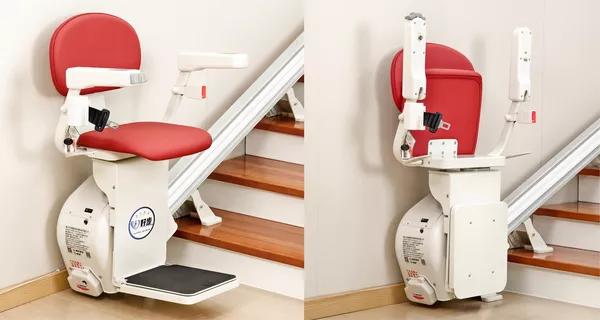
Key Reasons for Excessive Long-Term Maintenance Expenses
1. Incorrect Lubrication and Daily Operation Habits
Many users make the mistake of using universal lubricants like WD-40 on guide rails and gears. These oil-based lubricants easily adsorb dust and debris, forming sticky dirt layers that increase mechanical friction. Long-term misuse will cause gear wear, rail jitter and even motor overload failure, greatly raising repair costs.
In addition, frequently starting and stopping the lift abruptly or overloading the equipment will accelerate component aging. These subtle daily bad habits accumulate over time and evolve into major mechanical faults.
2. Neglected Minor Faults and Delayed Servicing
Minor symptoms such as slow running speed, slight abnormal noise and delayed sensor response are easily ignored. These small problems are early warning signs of component wear and circuit aging. Delaying inspections will cause single-point faults to spread to the entire transmission and power system, turning simple low-cost maintenance into expensive overhauls.
3. Irregular Battery Maintenance Management
The battery is the core consumable part of a home stair lift. Many homeowners leave the equipment idle for weeks without regular activation, which causes battery power loss, reduced capacity and shortened service life. Frequently replacing batteries in advance is one of the biggest unnecessary long-term cost burdens.
4. Blind Purchase of High-Price Service Contracts
Some families blindly sign full-price annual service contracts without evaluating actual usage frequency. Light-usage households with less than 5 daily trips do not require semi-annual intensive maintenance. Matching service frequency with actual usage can effectively avoid wasted service fees.
Practical Strategies to Cut Long-Term Maintenance Costs
Reducing maintenance costs does not mean reducing maintenance quality. It means implementing refined, targeted maintenance to eliminate invalid expenses and avoid failure losses. First, establish a fixed monthly inspection habit: wipe the guide rail with a dry clean cloth, clean charging contacts, and check safety buckle flexibility to keep the equipment operating environment clean.
Second, use only professional dry silicone lubricant for semi-annual mechanical maintenance to ensure smooth operation without dust accumulation. Avoid all non-specialized lubricants to prevent mechanical corrosion and wear. Arrange a professional annual full inspection to troubleshoot hidden faults in advance, which can extend the overall service life of a stairs lift by 3 to 5 years.
For battery maintenance, activate and run the equipment regularly even when not in use to maintain battery activity. Replace batteries strictly according to the 3–5 year cycle instead of frequent premature replacement. Reasonably match service plans according to usage frequency to avoid over-maintenance waste.
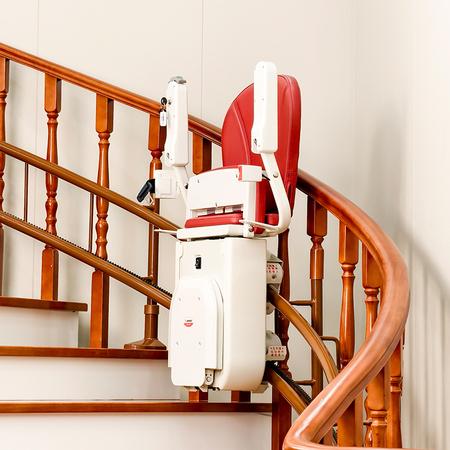
FAQs About Residential Stair Lift Maintenance Cost Saving
1. Is annual professional inspection necessary for low-usage home stair lifts?
Yes. Even with low daily usage, internal circuits and gears will age naturally. Annual professional 25-point safety inspections can eliminate hidden faults that cannot be found by daily visual checks, avoiding high-cost sudden failures.
2. Why do many stair lifts need frequent battery replacement?
Most premature battery failures result from long-term idle state and insufficient cyclic activation. Regular operation and stable charging habits can fully extend the battery’s standard 3–5 year service cycle.
3. Can DIY lubrication replace professional maintenance?
Simple silicone lubrication and cleaning can reduce daily wear, but professional inspections covering motors, circuits and safety sensors cannot be replaced by DIY operations. A combination of daily self-maintenance and annual professional servicing is the most cost-effective solution.
4. How to judge whether a service contract is cost-effective?
Heavy-usage households (more than 20 daily trips) and outdoor installed equipment are suitable for semi-annual service contracts. Light-usage indoor families only need annual single inspection services to save unnecessary contract costs.