
Creating an accurate budget starts with understanding every expense item involved in the installation process. Most first-time buyers only consider the base equipment price, ignoring custom fabrication, labor fees, and post-installation costs that greatly impact the total budget. Residential mobility accessibility projects follow relatively fixed pricing rules in 2026, and most formal suppliers provide itemized quotes for full transparency.
To help homeowners calculate costs intuitively, below is a standardized price and specification reference table based on mainstream U.S. residential installation market data, covering the two most common stair lift types:
|
Cost & Spec Item
|
Straight Stair Lift (Standard Home)
|
Curved Stair Lift (Custom Home)
|
|---|---|---|
|
Base Equipment Cost
|
$2,500 – $4,500
|
$6,000 – $12,000
|
|
Professional Installation Labor
|
$600 – $1,200
|
$1,500 – $3,000
|
|
Average Installation Time
|
6–10 working hours
|
12–28 working hours
|
|
Permit & Inspection Fees
|
$0 – $200 (most areas exempt)
|
$100 – $350
|
|
Standard Warranty Duration
|
1–2 years
|
2–3 years
|
|
Total Project Budget Range
|
$3,100 – $5,800
|
$8,000 – $15,000
|
The biggest budget difference comes from stair structure customization. Straight stair lifts use prefabricated standard rails, which keeps manufacturing and installation costs low. In contrast, curved stair lifts require exclusive rail bending and on-site adjustment according to unique stair angles, turning radii and landing layouts, which significantly raises overall expenses.
1.1 Equipment Grade Affects Base Budget
Stair lift products are divided into entry-level, standard and premium grades. Entry-level models only retain basic lifting functions, with simple control panels and limited safety configurations, suitable for temporary low-frequency use. Standard residential models add essential safety sensors, emergency stop systems and slow start-stop functions, which are the most cost-effective choice for long-term family use. Premium versions include upgraded comfortable seating, wireless dual controls, foldable rail designs and weather-resistant treatments, ideal for luxury homes or semi-outdoor stair installations.
1.2 Customization Items Bring Variable Costs
Many invisible customization items will change the final budget. Common extra charges include extended rail length, reinforced load-bearing brackets, upgraded heavy-duty motors for high-weight capacity, and personalized seat accessories. For homes with ultra-narrow stairs, high-rise long stairs or special obstacle layouts, additional structural adaptation adjustments are required, generating reasonable extra fees. It is crucial to confirm all customized items in advance to avoid unexpected budget overruns.
1.3 Long-Term Maintenance Budget Planning
A complete budget should not only cover one-time installation costs but also daily maintenance expenses. Basic routine maintenance includes rail cleaning, mechanical lubrication and circuit inspection, with an average annual cost of $150–$300. Extended warranty services can be purchased for $300–$800, covering free replacement of wearing parts and priority after-sales repair, effectively reducing long-term operating risks.
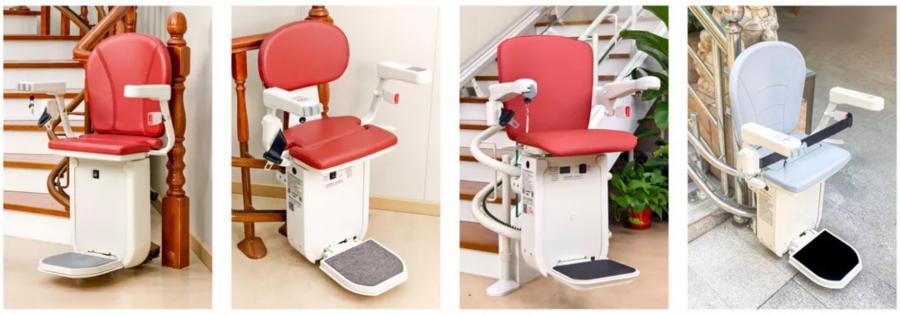
Practical Budget-Saving Strategies for Homeowners
Reasonable budget planning does not mean blindly choosing low-priced products. It means balancing cost, safety and service to avoid wasting money on excessive configurations or risky low-quality equipment. After sorting out mainstream market rules in 2026, there are several proven methods to help homeowners control expenses effectively.
First, collect 2–3 formal business quotes for comparison. Regular suppliers provide detailed itemized lists, clearly marking equipment fees, labor costs and optional services, helping users eliminate inflated pricing. Second, prioritize necessary safety functions rather than fancy additional features. Core safety configurations including anti-collision sensors and emergency braking are indispensable, while decorative upgrades can be skipped to save costs. Finally, check local aging accessibility subsidies or medical insurance reimbursement policies. Many regions offer partial financial support for household mobility equipment renovations, greatly reducing family economic pressure.
Frequently Asked Questions About Stairs Lift Budgeting
Q1: Are straight stair lifts always more affordable than curved models?
Yes, in most residential scenarios. Straight stair lifts adopt standardized mass production parts and simple installation processes, with stable and transparent pricing. Curved models require one-to-one custom rail production and prolonged on-site debugging, so their total cost is usually 2–3 times higher than standard straight products.
Q2: What hidden costs should be avoided during installation?
Common hidden costs include arbitrary charging for basic measuring fees, mandatory high-priced extended warranties, and unnecessary structural transformation fees. Homeowners should confirm in writing that there are no hidden charges before signing the contract, and clarify the scope of free after-sales services within the warranty period.
Q3: Is it worth buying second-hand or refurbished stair lifts to save budget?
It is not recommended for family daily use. Second-hand equipment has unknown component aging degrees, and most refurbished products lack complete safety certification and formal after-sales support. The potential safety risks and subsequent maintenance costs far exceed the initial price savings.
Q4: How long is the payback period for a formal installed stair lift?
High-quality equipment with standard installation can be used stably for 10–15 years. Calculated by average use cycle, the annual average investment is very low. More importantly, it completely avoids accidental fall risks of elderly family members, bringing irreplaceable safety value for home life.