
Residential and commercial accessibility equipment have completely different design standards. Home-use lifts are designed for low-frequency, private use, while commercial building equipment faces high traffic, frequent operation, and strict industry compliance requirements. Shopping malls, office buildings, hotels, and public service centers welcome hundreds of visitors every day, which means accessibility equipment must withstand long-term, high-intensity operation.
A professional stair wheelchair lift tailored for commercial scenarios features reinforced structural design, stable operating systems, and standardized safety protection mechanisms. Unlike ordinary household models, commercial-grade lifts focus more on durability, load stability, and public safety compliance, avoiding frequent failures, shutdowns, and maintenance troubles that affect building accessibility certification and user experience.
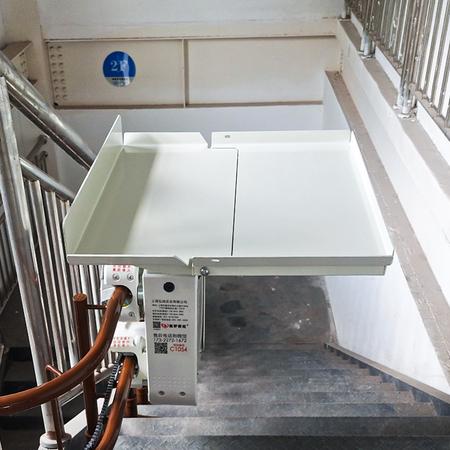
Core Technical Parameters of Commercial-Grade Stair Wheelchair Lift
Durability is never a vague concept. It is supported by standardized technical parameters and industrial-grade configurations. For commercial building procurement, these core data can directly judge the service life and practical performance of the equipment. The following parameters are summarized from international commercial accessibility equipment industry standards and long-term market application data.
|
Parameter Item
|
Commercial Standard Value
|
Practical Commercial Advantage
|
|---|---|---|
|
Rated Load Capacity
|
250kg – 300kg
|
Suitable for most wheelchair users and daily carrying needs
|
|
Operating Speed
|
0.12m/s – 0.15m/s
|
Stable and safe, no jitter during high-frequency use
|
|
Continuous Working Cycle
|
800+ times per day
|
Adapt to peak passenger flow in commercial scenarios
|
|
Service Life
|
10+ years (normal maintenance)
|
Long-term stable operation, low replacement cost
|
|
Working Temperature Range
|
-20℃ to 55℃
|
Adapt to indoor and semi-outdoor commercial environments
|
Key Durability Features to Check Before Purchase
1. Reinforced Structural and Material Configuration
The frame and guide rail structure determines the overall durability of the equipment. Excellent commercial lifts adopt high-strength aluminum alloy or steel plate overall welding structure, with anti-rust and anti-corrosion surface treatment. This effectively avoids structural deformation, rust and aging caused by long-term air exposure and frequent friction. Inferior lightweight household materials will loosen and deform after several months of high-frequency use, bringing potential safety hazards.
2. Industrial-Grade Driving and Brake System
The core failure point of most low-quality lifts lies in the driving motor and brake device. Commercial durable models are equipped with silent industrial motors and dual safety brake systems, which can achieve instant stop and anti-slip protection in case of power failure or sudden failure. The whole system supports long-term continuous operation without overheating and stalling, ensuring stable operation in peak business hours every day.
3. Standardized Safety and Anti-Fault Design
Durability is not only reflected in service life, but also in stable fault-free operation. Formal commercial equipment is equipped with anti-collision sensors, overload protection, emergency stop buttons and automatic power-off protection devices. These designs can avoid equipment damage caused by misoperation and external impact, greatly reduce maintenance frequency, and ensure long-term reliable operation of the stair wheelchair lift in complex commercial scenarios.
Frequently Asked Questions About Commercial Stair Wheelchair Lift Selection
1. What is the biggest difference between commercial and residential stair wheelchair lift?
The core difference lies in operating frequency, load standard and safety configuration. Commercial models support high-frequency daily operation, with higher load capacity and stricter safety protection design, and meet public building accessibility certification standards. Residential models are only suitable for low-frequency family use and cannot be used in public commercial spaces.
2. How to judge whether a lift is durable enough for long-term commercial use?
You can judge through three core indicators: daily working cycle parameters, structural material configuration and after-sales service guarantee. Qualified commercial equipment needs to support more than 800 daily operations, adopt anti-corrosion and reinforced structures, and provide formal long-term maintenance services, which are the key basis for judging durability.
3. Do commercial stair wheelchair lifts need regular professional maintenance?
Yes, regular professional maintenance is essential. Although commercial-grade equipment is durable, long-term high-frequency operation will cause slight wear of parts. Regular inspection, lubrication and calibration by professional technicians can effectively extend the service life, eliminate potential faults in advance, and ensure that the equipment always meets safety operating standards.
4. Can the lift adapt to different types of stair structures in commercial buildings?
Most standardized commercial products support straight and curved stair adaptation, and can be customized according to the actual width, slope and space of commercial building stairs. Before purchasing, you need to provide on-site stair parameters to the manufacturer to ensure the equipment fits perfectly and operates stably.
5. Is the installation of commercial stair wheelchair lift compliant with building codes?
Formal commercial-grade products fully comply with international public building accessibility codes and safety operation standards. Purchasing certified regular products can help commercial buildings pass accessibility assessment smoothly and avoid compliance risks caused by unqualified equipment.
Practical Selection Tips for Different Commercial Scenarios
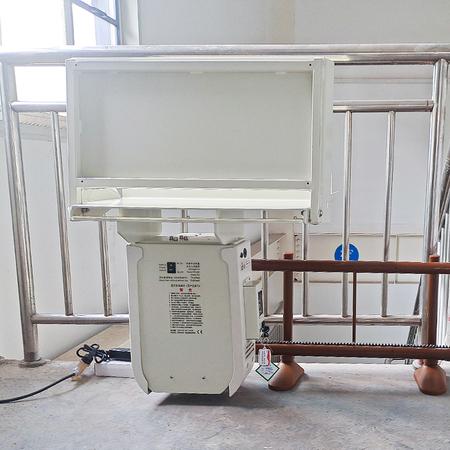
Different commercial buildings have different usage needs. Office buildings with stable passenger flow can choose standard-load durable models; shopping malls and scenic spots with large passenger flow are recommended to select enhanced high-frequency operation models; hotels and high-end public places can prioritize low-noise and beautiful integrated models. No matter which model you choose, core durability parameters and safety configurations must be the primary consideration.