
Many old and modern buildings face a common but overlooked problem: uneven slopes and steep stairways block wheelchair users from free access. Traditional ramps often take up huge space, while vertical elevators are impossible to install in slope-only areas. This is where an inclined wheelchair elevator comes in to fix all these practical pain points perfectly.
What Are Slope Access Challenges Faced by Modern Buildings?
Building slope access issues have long troubled property managers, architects, and people with limited mobility. For most residential villas, community outdoor slopes, and commercial building stair slopes, conventional accessibility solutions have obvious drawbacks that cannot meet daily use and standard compliance requirements.
First, long gentle ramps require extensive floor space, which is unaffordable for compact building layouts. Many urban buildings have narrow passageways and limited outdoor areas, making standard ramp installation impossible. Second, traditional stair lifts only serve individual seated users and cannot carry standard wheelchairs, failing to support independent travel for disabled people who rely on wheelchairs.
Third, vertical elevators need fixed shaft structures and flat foundation surfaces, which are not adaptable for inclined slope environments. These problems leave many buildings non-compliant with accessibility regulations and create inconvenient, unsafe travel conditions for wheelchair users. To break these limitations, a professional inclined wheelchair elevator provides a targeted and practical solution tailored for slope scenarios.
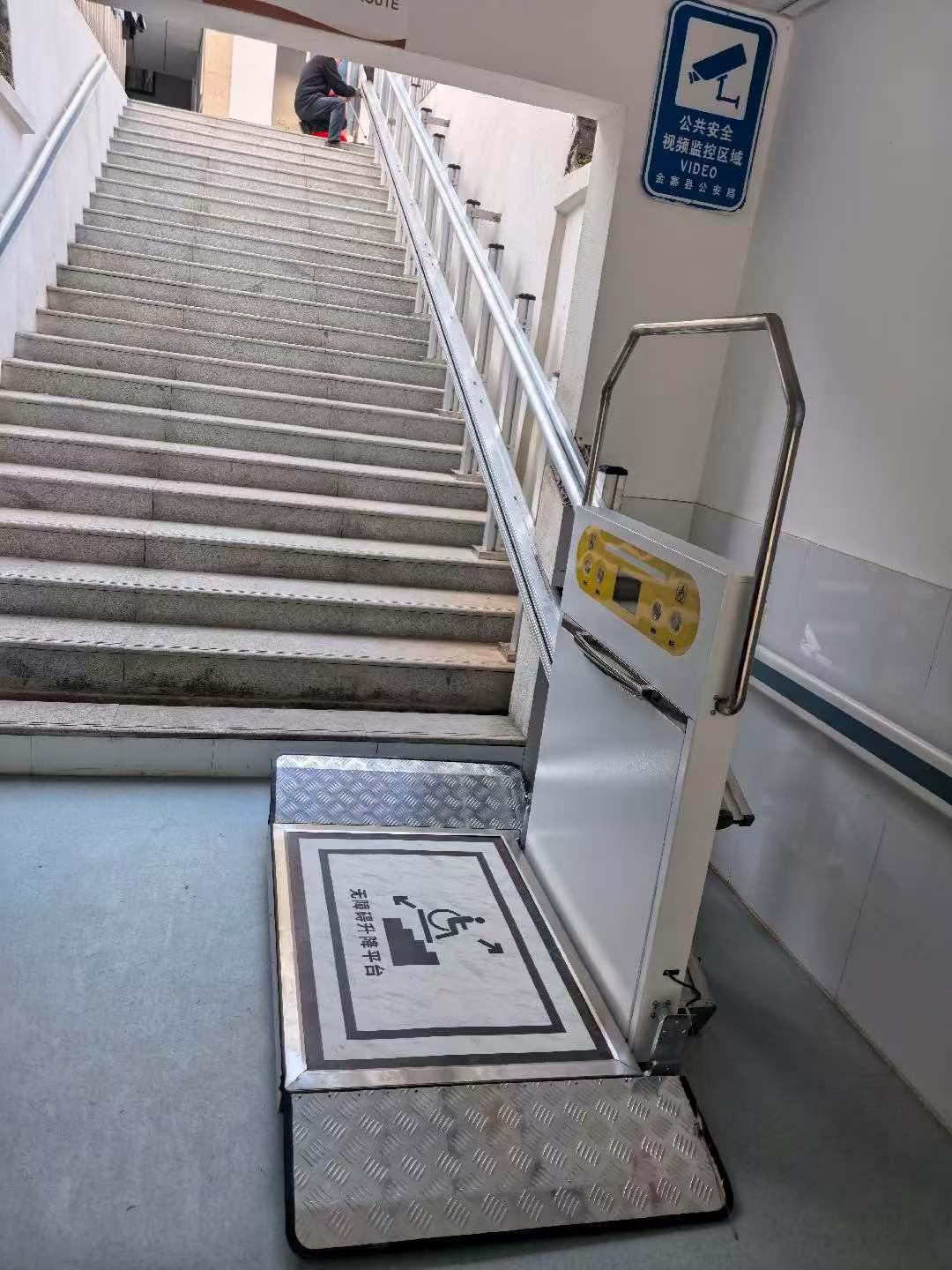
Core Advantages of Inclined Wheelchair Elevator for Building Slope Access
Different from traditional accessibility equipment, an inclined wheelchair elevator is specially designed for inclined building surfaces, stair slopes, and outdoor gradient passageways. It runs along the existing slope track without modifying the original building structure greatly, which is its biggest highlight for building renovation and new construction projects.
1. Strong Adaptability to Various Slope Conditions
This accessibility elevator can adapt to different slope angles ranging from gentle to steep, covering most building outdoor slopes and indoor stair slopes. It does not require flat ground or independent elevator shafts, making it suitable for old building renovation projects that lack transformation space. Whether it is a residential community pedestrian slope or a small commercial building entrance gradient, the equipment can complete customized installation.
2. Space-Saving and No Structural Damage
Compared with traditional accessibility ramps that occupy large public areas, the track of the inclined wheelchair elevator is installed close to the slope surface, occupying almost no pedestrian passage space. The whole installation process does not need to chisel walls, modify floors, or change the original building appearance, which fully protects the building’s original structure and aesthetic design.
3. Stable Load Capacity and Safe Operation
Practical safety and load-bearing performance are the core concerns of accessibility equipment. The following detailed parameter list shows the standard configuration of mainstream building-used inclined wheelchair elevators, reflecting its professional and reliable performance:
|
Parameter Item
|
Standard Specification
|
Applicable Scenario
|
|---|---|---|
|
Maximum Load Capacity
|
300kg
|
Standard wheelchair + adult user
|
|
Applicable Slope Angle
|
15°-45°
|
Indoor stairs & outdoor building slopes
|
|
Running Speed
|
0.15m/s (adjustable)
|
Safe low-speed passenger transport
|
|
Operating Voltage
|
220V/110V Domestic Universal
|
Residential & commercial buildings
|
|
Safety Protection Devices
|
Anti-fall, anti-collision, emergency stop
|
All-weather safe use
|
Practical Application Scenarios of Inclined Wheelchair Elevator
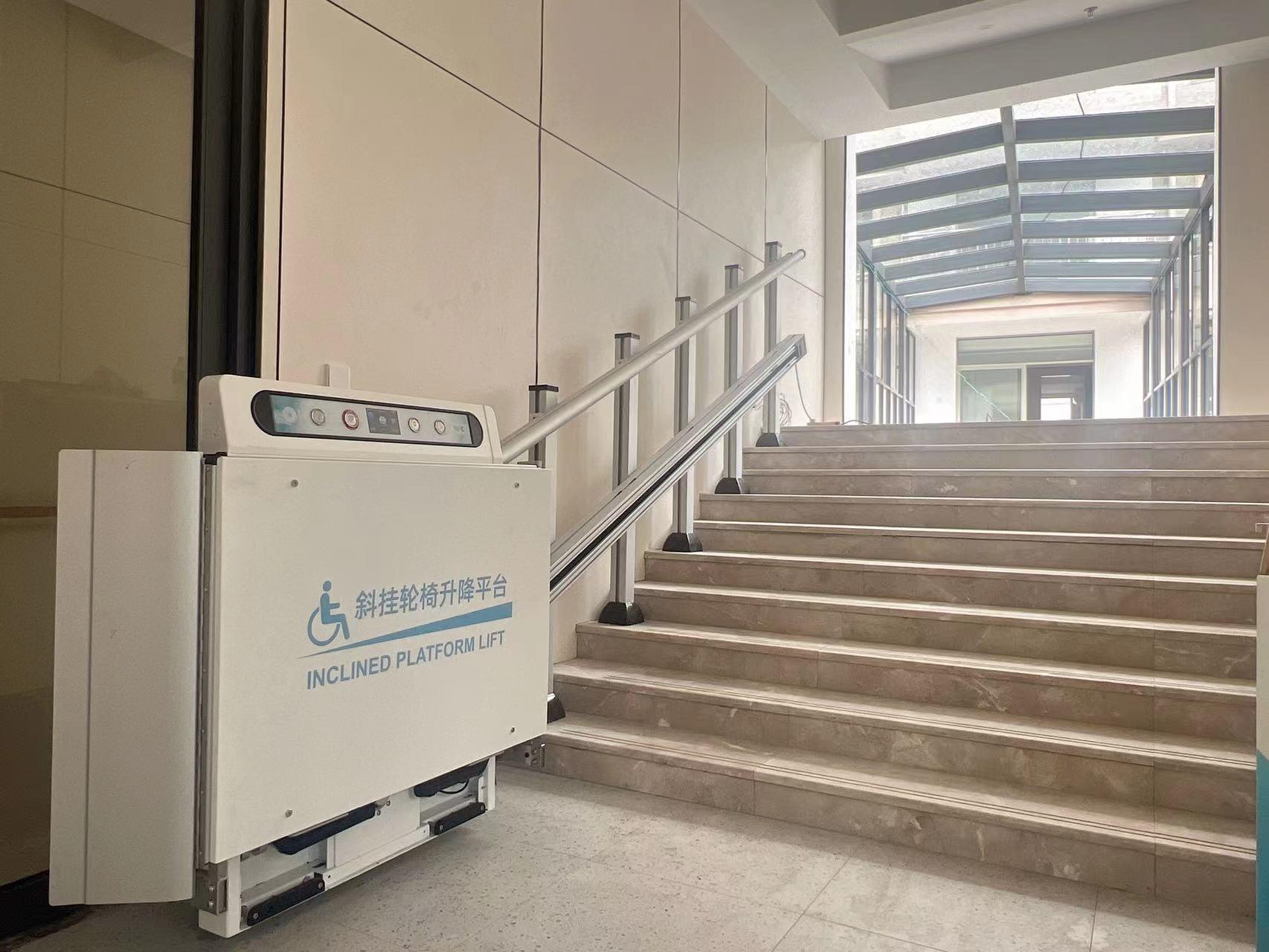
Thanks to its flexible installation and stable performance, the inclined wheelchair elevator has become the preferred accessibility solution for more and more building scenarios. In residential areas, it solves the problem of outdoor slope travel for elderly and disabled wheelchair users, helping them enter and exit the community independently.
In public commercial buildings such as schools, hospitals, and shopping malls, the equipment makes up for the deficiency of traditional ramps and vertical elevators, ensuring public buildings meet national and international accessibility standards. For old building renovation projects with limited transformation conditions, it is the most cost-effective and efficient optimization scheme without large-scale construction.
FAQs About Inclined Wheelchair Elevator for Building Slope Access
1. Is an inclined wheelchair elevator suitable for all building slopes?
Most conventional building slopes within 15° to 45° are fully applicable. For individual ultra-steep or irregular slopes, manufacturers can provide customized track design solutions to match the building’s actual terrain conditions.
2. Does installing an inclined wheelchair elevator require large-scale construction?
No. The equipment adopts wall-mounted or ground track installation, which does not damage the original building structure. The construction cycle is short, and it will not affect the normal use of the building during installation.
3. Is the daily maintenance of inclined wheelchair elevator complicated?
The equipment has a simple mechanical structure with low failure rate. Daily maintenance only includes regular track cleaning, power system inspection and safety device testing, which saves time and maintenance cost for property managers.
4. Can the equipment work normally in outdoor rainy and sunny environments?
Mainstream products adopt waterproof and anti-corrosion material treatment, which supports all-weather outdoor use. It can resist rain erosion and sun aging, adapting to outdoor building slope environments.
5. Is the inclined wheelchair elevator compliant with accessibility building codes?
Qualified products fully meet international accessibility standards and domestic building barrier-free design specifications, which can help buildings pass accessibility compliance inspections smoothly.