
Stairs have always been the biggest daily barrier for wheelchair users. Whether it is a short residential staircase or a long public building stairway, traditional stairs make independent travel almost impossible for people with limited mobility. Many buildings lack space for large elevators, leaving few accessible solutions. This is where practical, space-saving accessibility equipment changes everything. Inclined platform wheelchair lifts offer a simple, safe, and effective way to fix stair access problems for wheelchair users in various scenarios.
Practical Improvements of Inclined Platform Wheelchair Lifts for Stair Access
Barrier-free building design focuses on eliminating mobility obstacles without large-scale structural renovation. Unlike vertical elevators that require dedicated shafts and ample floor space, stair-climbing accessibility equipment adapts to existing stair structures perfectly. Inclined platform wheelchair lifts run along the slope of original stairs, requiring minimal modification to buildings while creating a stable vertical and horizontal passage for wheelchair users. This adaptive design greatly improves the convenience and safety of stair access for people with mobility impairments.
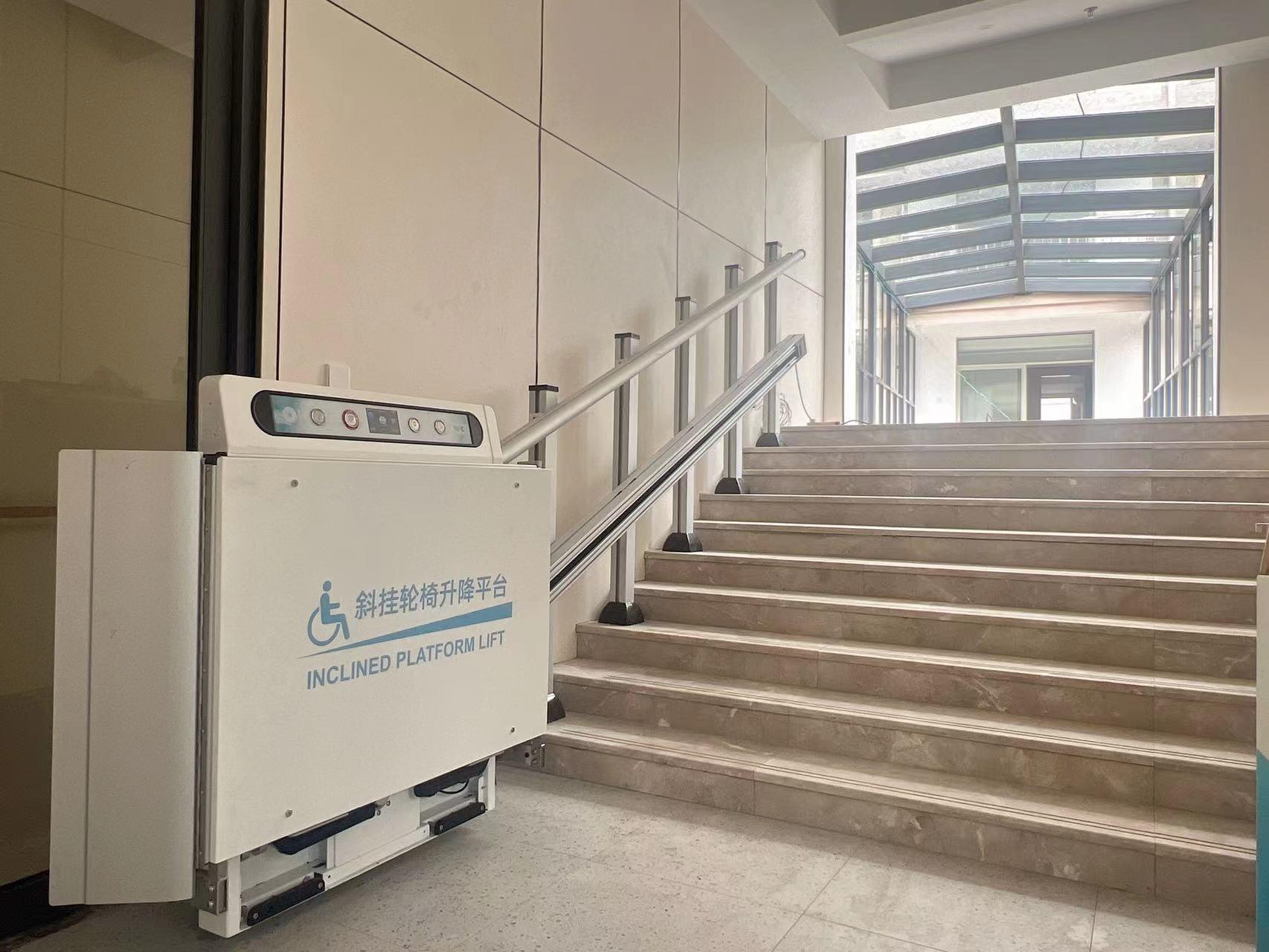
1. Space-Saving Installation Adapts to Most Stair Structures
One of the biggest challenges of traditional accessibility renovation is space limitation. Many old communities, villas, and small public buildings do not have extra room to build elevator shafts or install large vertical lifting equipment. Conventional stair chair lifts can only carry passengers without wheelchairs, forcing users to transfer manually and bringing extra safety risks.
This type of inclined lifting equipment solves the space and transfer problem perfectly. It installs along the inner or outer side of the staircase, occupies almost no usable indoor area, and fits straight, curved, narrow, and long-slope stairs. The following standard parameter list shows mainstream operating specifications of qualified equipment, reflecting its strong scene adaptability:
|
Parameter Item
|
Standard Specification
|
Applicable Scene Description
|
|---|---|---|
|
Rated Load Capacity
|
250kg – 300kg
|
Suitable for standard wheelchairs plus user weight
|
|
Operating Speed
|
0.10m/s – 0.15m/s
|
Stable low speed to avoid jitter and tilting risks
|
|
Applicable Stair Incline Angle
|
15° – 45°
|
Covers most residential and public stair slopes
|
|
Maximum Lifting Height
|
12m
|
Meets multi-story building stair access needs
|
|
Platform Size
|
800mm × 1200mm (standard)
|
Fits most standard manual and electric wheelchairs
|
With flexible installation and universal parameter settings, the equipment can be customized according to actual stair width and inclination, realizing barrier-free stair passage in narrow and complex building spaces that traditional elevators cannot cover.
2. Integrated Platform Design Avoids Manual Transfer Risks
Most traditional stair lifting devices require users to leave their wheelchairs and sit on specialized lift seats. Manual transfer is not only labor-intensive for users and caregivers but also easily causes falls, slips, and secondary injuries. For people with lower limb disabilities or limited physical strength, frequent transfer is a huge hidden danger in daily travel.
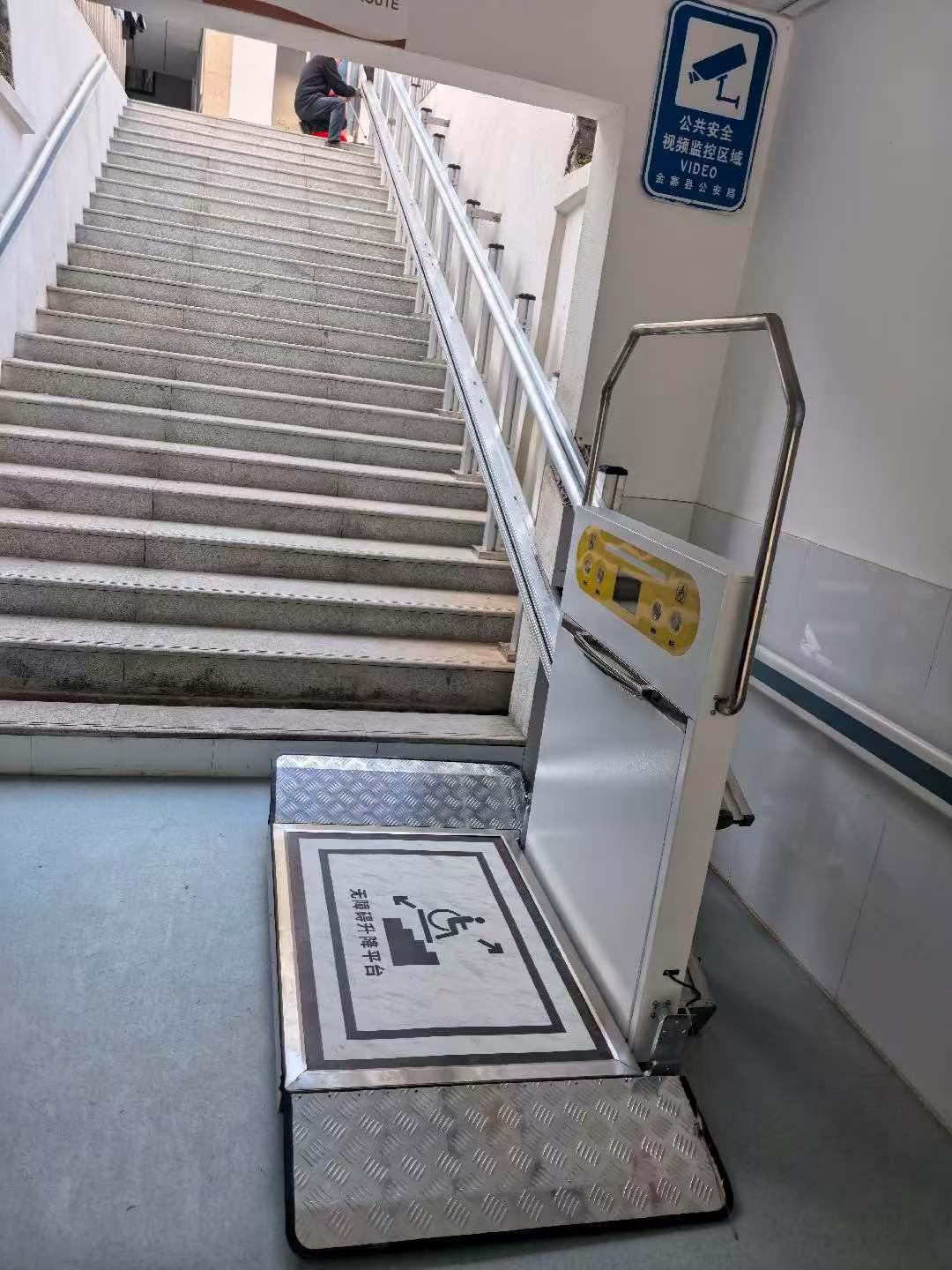
The core advantage of inclined platform wheelchair lifts is the flat bearing platform design. Wheelchair users can drive or push onto the platform directly without leaving their wheelchairs. The platform is equipped with anti-slip texture, guardrails, and automatic safety baffles. Once fixed, the equipment runs smoothly along the stair slope, allowing users to complete stair ascent and descent independently and safely. This design fundamentally optimizes the stair access experience and eliminates transfer safety hazards.
3. Intelligent Safety Mechanisms Reduce Access Accidents
Safety is the top priority of barrier-free lifting equipment. High-quality accessibility lifting systems are equipped with multiple active and passive safety protection devices to cope with unexpected situations during operation.
Standard safety configurations include obstacle sensing sensors, emergency stop buttons, anti-slip platform surfaces, anti-overload protection, and power failure self-locking functions. When foreign objects block the stair passage or the equipment encounters abnormal resistance, the system will stop running immediately to prevent extrusion and tipping accidents. In case of sudden power failure, the self-locking device can lock the track instantly to ensure the platform stays stable, avoiding sudden sliding. These mature safety mechanisms greatly improve the reliability of stair access for wheelchair users.
4. Low Operation Threshold Improves Independent Mobility
Many elderly and disabled users lack professional operation skills and cannot use complex accessibility equipment independently. Complicated operation steps often require accompanying personnel to assist, which limits the independence of users’ daily travel.
This inclined lifting equipment adopts one-key automatic control, with simple and clear button operation and optional wireless remote control. The whole process of boarding, lifting, and exiting does not require professional operation knowledge. Users can complete stair passage independently, greatly improving their self-mobility and quality of life. For public buildings such as schools, hospitals, and community centers, the low operation threshold also facilitates universal use by different groups of disabled people.
FAQs About Inclined Platform Wheelchair Lifts for Stair Access
1. Can inclined platform wheelchair lifts work on curved staircases?
Yes. Customized models can adapt to curved and turning stair structures. Professional designers will adjust track radian and running parameters according to the actual stair shape to ensure stable and safe operation.
2. Is professional operation training required for daily use?
No training is needed. The device adopts simplified one-key control and remote control design. Elderly and disabled users can operate it independently after a simple trial, with an extremely low usage threshold.
3. What safety protections are equipped on standard models?
Standard configurations include obstacle detection, emergency stop, anti-overload protection, anti-slip platform, and power failure self-locking system, covering all common risk points during stair lifting operation.
4. Is the equipment suitable for old building renovation projects?
Absolutely. It requires no large-scale wall breaking or shaft construction, with small engineering volume and low renovation cost. It is the most cost-effective barrier-free renovation solution for old buildings with limited space.