
If you’re a commercial distributor or procurement specialist focusing on accessibility equipment, you’ve definitely noticed the booming stair lift market in recent years. More private villas, senior care facilities and public buildings are upgrading their barrier-free infrastructure, creating steady and growing industry demand. Keeping up with latest market changes and learning to screen reliable manufacturers helps you avoid supply chain risks. Sourcing premium curved stair lifts enables your business to deliver trustworthy barrier-free solutions and retain long-term cooperative clients.
Industry Outlook and Supplier Selection Guide for Curved Stair Lifts
1. Current Market Status and Development Trends
Driven by global aging trends, improved public accessibility policies and large-scale building renovation projects, the barrier-free equipment industry has achieved sustained and stable growth. Unlike conventional straight stair lifts, curved stair lift products require custom-track design, high-precision structural calibration and mature safety technology. This creates a high-value segmented market with low replaceability and stable customer demand.
From 2026 onward, two core trends will reshape this industry. First, market demand has shifted from basic functional usability to comprehensive performance. Modern buyers prioritize stable operation, silent running, reliable load capacity and intelligent safety systems, rather than simply focusing on basic lifting functions. Second, personalized customization has become a core competitive advantage. Unique stair radians, varying floor heights and diverse architectural styles require tailored solutions, raising higher technical barriers for emerging manufacturers.
In the long term, the industry will maintain positive growth momentum. As public awareness of accessibility continues to rise and old building renewal projects accelerate, professional barrier-free equipment will become standard configuration for more commercial and residential scenarios. Manufacturers with independent custom design capabilities and consistent batch quality will occupy the dominant share of the market.
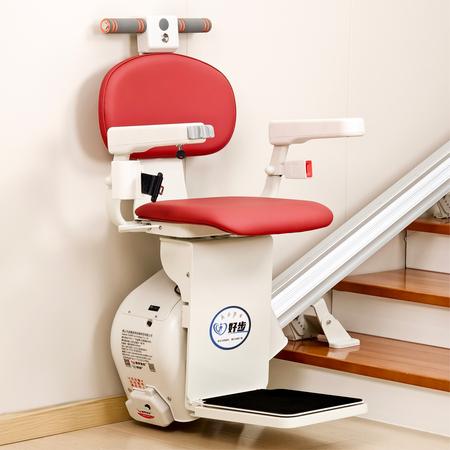
2. Core Standards for Selecting Reliable Suppliers
2.1 Independent R&D and Customization Capability
Customization capability stands as the most critical evaluation standard for stair lift manufacturers. Every curved staircase features exclusive bending angles and spatial structures, making universal standard products unable to fit perfectly or operate smoothly. Trustworthy suppliers equip professional mechanical design teams, capable of completing on-site measurement, track modeling, structural optimization and personalized adjustments to match diverse project requirements.
Professional manufacturers can provide complete design blueprints, parameter verification reports and customized production schemes, ensuring every set of equipment perfectly adapts to on-site building conditions. This professional customization effectively prevents installation failures, operational jitter and potential safety hazards caused by mismatched structural design.
2.2 Raw Material Quality and Production Craftsmanship
Product durability and operational stability are fundamentally determined by raw material quality and manufacturing precision. Formal and qualified manufacturers adopt high-strength structural steel, anti-rust surface treatment technology and durable drive components. Core accessories including guide rails, drive motors and safety locks undergo strict screening to guarantee long-term load resistance and wear resistance in daily operation.
Advanced manufacturing techniques such as precision welding, integral forming and multi-stage polishing effectively reduce structural deformation and operational noise. In contrast, manufacturers that cut corners on raw materials and production processes often deliver products with short service life and high failure rates. Frequent after-sales issues will seriously damage the market reputation of distributors and contractors.
2.3 Batch Quality Consistency and Inspection System
For bulk wholesale business and long-term engineering cooperation, batch quality consistency matters far more than sample quality. Many manufacturers deliver high-quality samples but fail to maintain unified standards in mass production. Reliable suppliers implement full-process quality control, covering raw material inspection, semi-finished product testing, finished product aging tests and safety function calibration.
Complete inspection archives and standardized quality management systems ensure all delivered products maintain unified precision, stable performance and compliant safety standards. Consistent batch quality serves as the core foundation for distributors to undertake large-scale and long-term engineering projects.
2.4 Delivery Cycle and After-sales Support System
Engineering projects and bulk procurement orders have strict requirements on delivery cycles. Powerful manufacturers own standardized production lines and scientific scheduling mechanisms, ensuring timely delivery even for fully customized orders. Meanwhile, comprehensive professional after-sales support is indispensable for barrier-free equipment projects.
Credible suppliers provide one-stop services including installation guidance, technical debugging, regular maintenance and rapid fault response. Comprehensive technical support helps distributors resolve on-site problems efficiently, lower project operational risks and improve end-customer satisfaction.
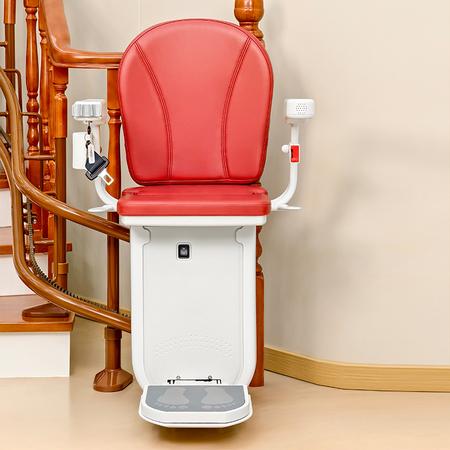
3. Common Procurement Mistakes for Distributors
Most procurement teams overly focus on unit price comparison during supplier selection, ignoring the comprehensive hidden costs of after-sales maintenance, product replacement and project delays. Low-cost products usually feature thin raw materials, simplified safety structures and unstable driving performance, leading to frequent operational failures and increasing long-term operational costs.
Another prevalent procurement mistake is neglecting custom matching accuracy. Generalized standard products cannot adapt to complex curved stair structures. Blindly pursuing low prices and fast delivery will result in poor installation effects, unsmooth operation and potential safety hazards, hindering project acceptance and long-term business cooperation.
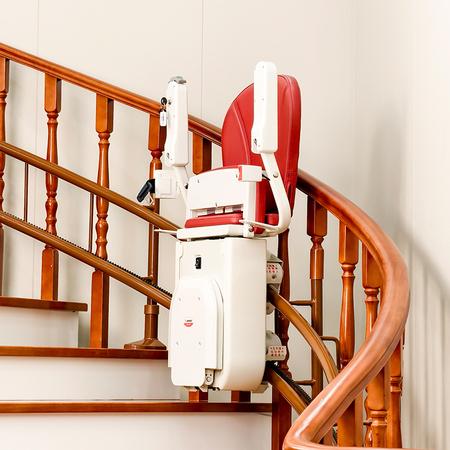
4. Frequently Asked Questions
Q1: What scenarios are suitable for curved stair lifting equipment?
It is widely applied in villas, duplex buildings, senior care centers, churches, shopping malls and other buildings with curved, rotating and irregular stairs. It effectively meets the vertical transportation needs of the elderly, disabled individuals and people with limited mobility.
Q2: Why is customized design necessary for this equipment?
Each curved stair has unique radian, span and height parameters. Only personalized track design and targeted structural adjustment can achieve precise fitting, stable operation and consistent safety performance, while standardized products fail to meet complex on-site installation requirements.
Q3: How to judge whether a manufacturer’s quality is stable?
You can evaluate product stability by checking official batch inspection reports, large-scale project cases, material certification documents and real after-sales feedback. Reliable manufacturers feature unified product parameters, low failure rates and complete technical document support.
Q4: What is the core advantage of high-end customized stair lifts?
High-end customized equipment boasts higher structural precision, quieter operation, more comprehensive safety protection and longer service life. It adapts to long-term and high-frequency operation scenarios and fully meets strict engineering acceptance standards for barrier-free projects.
Overall, the market demand for customized barrier-free lifting equipment continues to rise steadily. Grasping industry development trends and adopting scientific supplier selection strategies help distributors avoid procurement risks and optimize supply chain resources. High-quality, well-crafted curved stair lifts enable businesses to deliver high-standard accessibility solutions and achieve sustainable long-term growth.