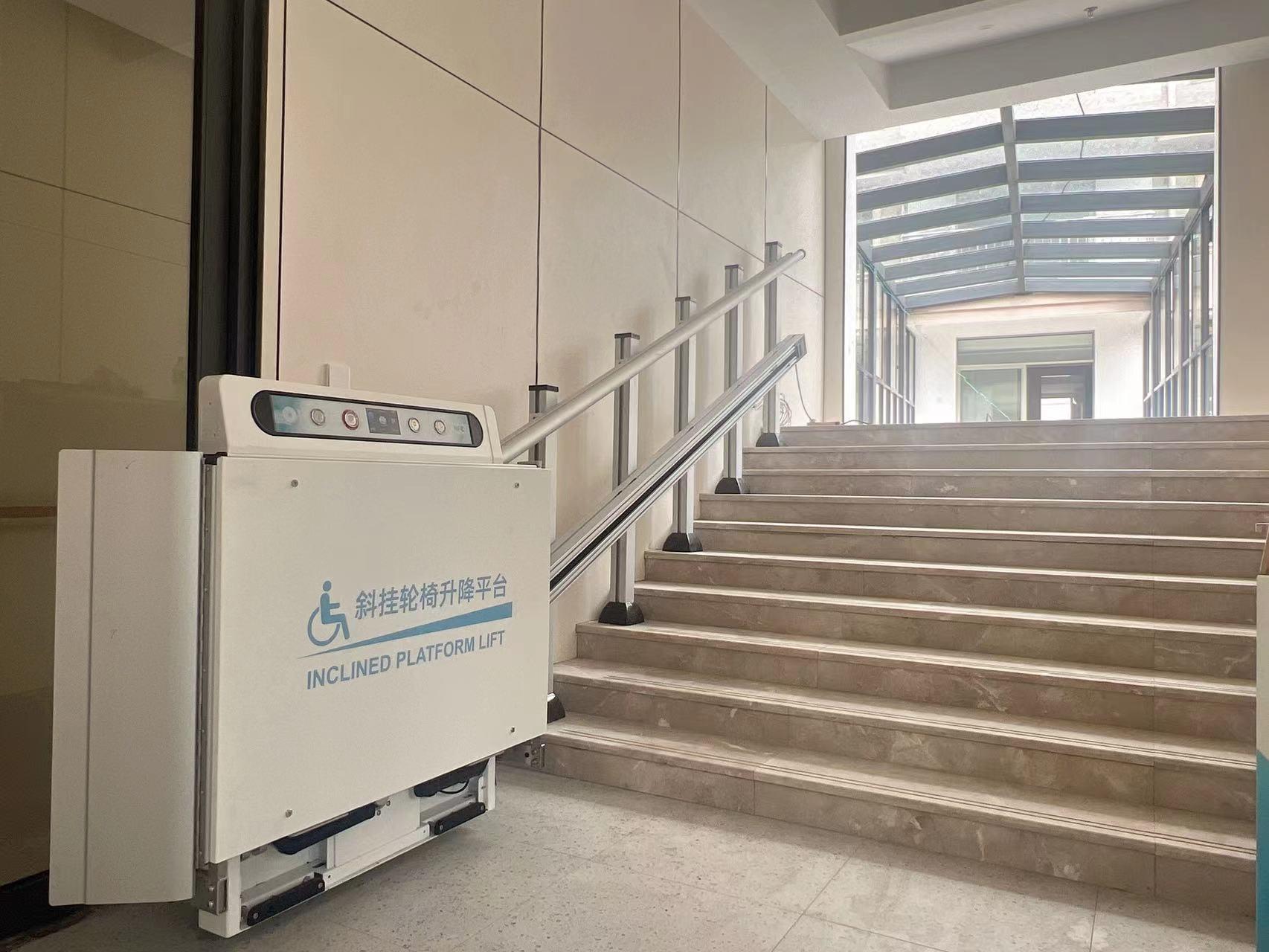
An inclined wheelchair lift is a simple idea: a platform that carries a wheelchair up or down a staircase. But simple ideas become complicated fast when the rider cannot evacuate on their own and the staircase is the only way out of a building. The safety features on these lifts are not accessories. They are the difference between a mobility aid and a hazard. If you are specifying a unit, inspecting one, or just trying to understand what you are looking at, here is what actually matters.
Obstruction Detection Is the First Line of Defense
The most common accident scenario on an inclined lift is a collision. The platform moves along a fixed path, and anything that ends up in that path—a dropped bag, a child, a piece of furniture left on the stairs—becomes an impact hazard. The lift needs to detect that obstruction and stop before it becomes a crushing event.
European standards for inclined lifting platforms require anti-impact and anti-shearing devices that bring the lift to an immediate stop when an obstruction is detected . The underside and leading edge of the platform are the critical zones. A sensing plate under the platform catches obstacles below, while ramp sensors catch obstructions in the direction of travel . The sensitivity matters too. One specification describes sensors that activate at 1.8 kg of pressure, roughly the weight of a small pet or a heavy bag .
What separates a good installation from a marginal one is whether these sensors are tested regularly. A sensor that has never been triggered may be stuck, misaligned, or disconnected. The function has to be verified, not assumed.
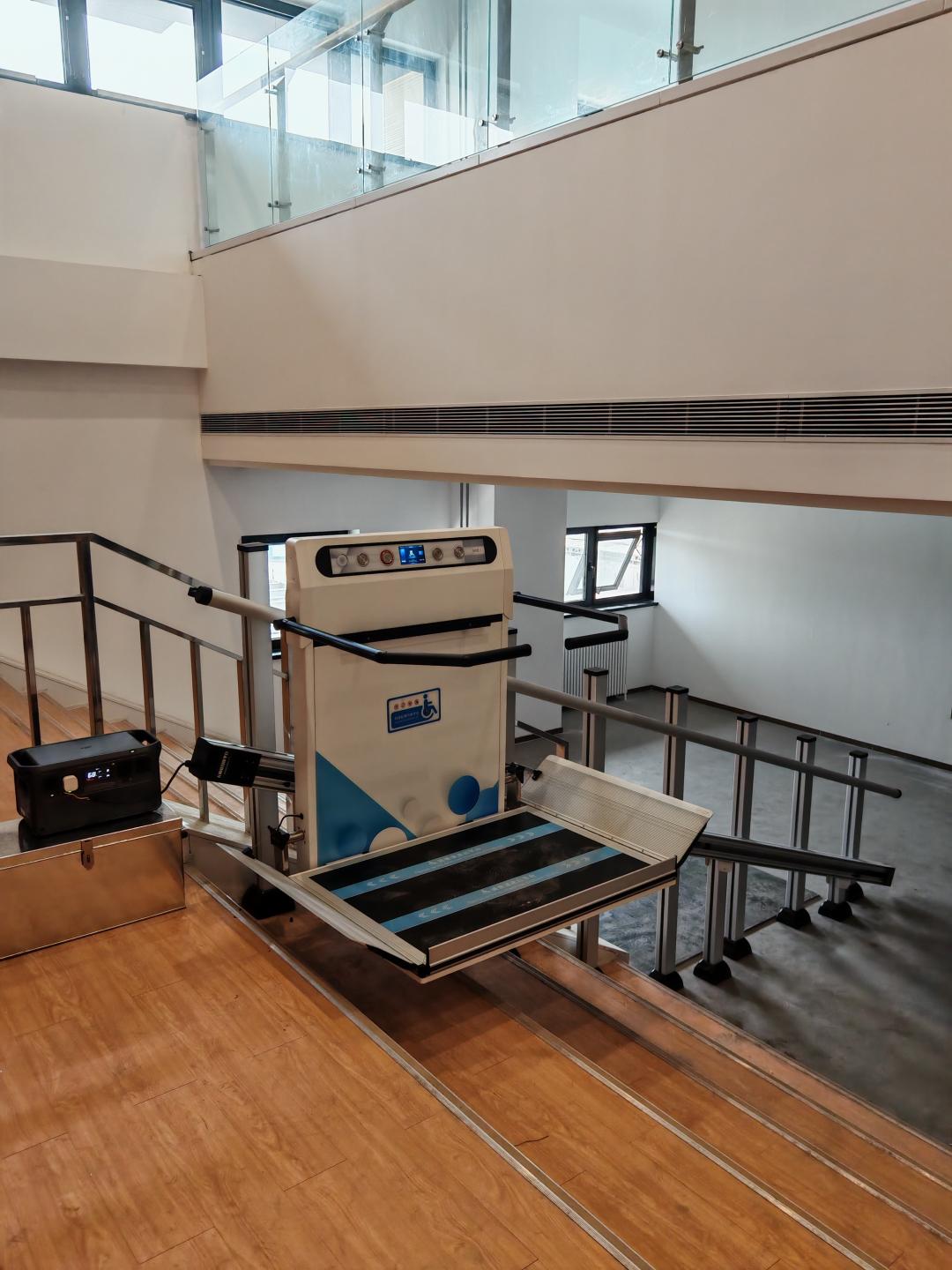
Overspeed and Free-Fall Protection
An inclined lift is not a vertical elevator, but it still has gravity working against it. If a drive component fails, the platform can descend faster than intended. The question is whether the safety system catches it.
ASME A18.1, the U.S. standard for platform lifts and stairway chairlifts, requires speed governors on residential inclines and stair chair lifts in its 2023 edition, removing the previous allowance for self-locking drives as the sole overspeed protection . The governor activates a safety gear that grips the guide rail and stops the platform. An alternative is allowed if the system is designed so that no overspeed can occur even with a single drive component failure, but that requires a level of design rigor that most standard units do not meet.
Some units use a mechanical pawl and electrical cutout switch that activate simultaneously if the platform descends too quickly . The redundancy is intentional. A single switch can fail. A mechanical pawl backed by an electrical cutout has two chances.
| Safety Feature | What It Protects Against | How to Verify It |
|---|---|---|
| Under-platform sensing plate | Obstruction beneath platform | Trigger manually at low height, confirm stop |
| Leading ramp sensor | Obstruction in travel path | Place test object in path, confirm stop |
| Overspeed governor / safety gear | Uncontrolled descent | Annual type test per ASME A18.1 or EN 81-40 |
| Emergency stop button | Any uncontrolled motion | Press during travel, confirm immediate stop |
| Safety arms / bars | Rider falling or leaning out | Confirm auto-lower before travel, raise at landing |
The Rider Restraint System Is Not Optional
A wheelchair on a moving platform is a wheeled object on an inclined surface. Without restraint, it can roll. The safety arms or bars that surround the rider during travel are the primary defense.
On many units, these arms lower automatically before the lift moves and raise only when the platform reaches a landing . The automatic function is important because it removes the human error of forgetting to engage a manual bar. If the rider is in a wheelchair, the arms also prevent the chair from tipping or sliding sideways on the incline.
The platform surface itself matters too. Anti-slip flooring is standard on reputable units for a reason . A wheelchair tire on a smooth metal platform on an incline is a slip risk even with the brakes engaged.
Emergency Communication and Manual Lowering
A rider stranded on a staircase during a power failure is not just inconvenienced. They are isolated. The lift needs a way for that person to call for help and a way to get down without power.
Two-way communication is required in many jurisdictions for lifts installed in areas that are not normally occupied . The call device has to reach someone who can respond, not just ring into an empty room. Battery backup is the other half. A unit that can complete several trips on battery power during an outage keeps the rider from being stuck mid-flight .
Manual lowering is the last resort. A handwheel or release mechanism allows trained personnel to bring the platform to a landing if the battery system fails or the drive is jammed. This is not a feature the rider operates. It is a feature for the person who comes to help.
FAQ
What is the most important safety feature on an inclined wheelchair lift?
Obstruction detection on the underside and leading edge of the platform. Most accidents involve the platform contacting something or someone in its path. Anti-impact and anti-shearing devices that stop the lift immediately are the first line of defense, and they must be tested regularly to confirm they still work .
Does an inclined wheelchair lift need an overspeed governor?
Under ASME A18.1-2023, residential inclines and stair chair lifts require a speed governor unless the drive is designed so that overspeed cannot occur even with a single component failure . European standards (EN 81-40) also address overspeed detection as a core safety requirement. If you are specifying a unit, confirm which standard it is certified to and what overspeed protection it includes.
Can a rider get stuck on the stairs during a power failure?
Only if the lift lacks battery backup or manual lowering. Reputable units include battery systems that allow several trips during an outage, and a manual lowering mechanism for trained personnel . Two-way communication is also required in many codes so the rider can call for assistance.
How often should safety devices be tested?
At every periodic inspection, and at least annually for the overspeed and obstruction systems. The specific interval depends on local code and the manufacturer’s instructions, but the principle is simple: a safety device that has never been tested is not a safety device. It is a component with an unknown state.
What is the difference between anti-impact and anti-shearing protection?
Anti-impact stops the lift when it hits something. Anti-shearing prevents the lift from trapping a body part between the moving platform and a fixed edge. Both are required on inclined platform lifts under EN 81-40, and both rely on sensors and immediate stopping action . The distinction matters during inspection because the two functions use different sensing zones and may fail independently.