
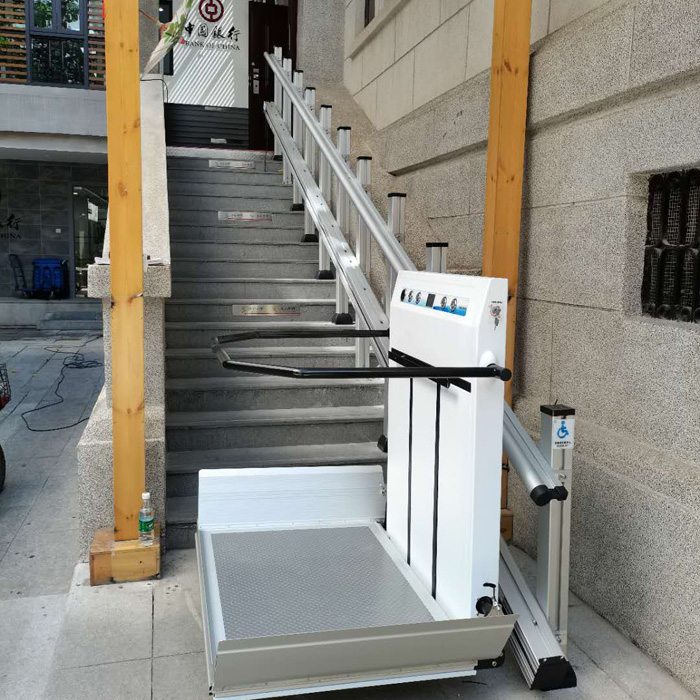
Inclined wheelchair lifts are vital accessibility solutions designed to help wheelchair users navigate staircases safely and independently. Unlike vertical lifts, these devices attach to existing stairwells, making them a versatile option for both public and private spaces where structural modifications are limited. As awareness of accessibility needs grows, inclined wheelchair lifts have become a key tool in bridging mobility gaps. This article explores their core features, common applications, design considerations, and benefits for users and facility managers.
A defining feature of inclined wheelchair lifts is their ability to integrate with existing stairs, eliminating the need for extensive construction. They operate along the slope of the staircase, with a platform that secures the wheelchair during movement. Most models are equipped with safety features such as non-slip platforms, safety belts, emergency stop buttons, and obstruction sensors that halt operation if an obstacle is detected. Additionally, they can be powered by electricity or batteries, ensuring functionality even during power outages, which is crucial for emergency situations.
The applications of inclined wheelchair lifts span a wide range of settings. Public buildings such as libraries, schools, hospitals, and retail stores often install them to comply with accessibility regulations and accommodate visitors with mobility impairments. They are also popular in residential settings, particularly in homes with straight or curved staircases where vertical lifts or elevators are not feasible due to space or cost constraints. Additionally, they are used in transportation hubs, theaters, and places of worship, ensuring that all individuals can access every area of the facility without assistance.
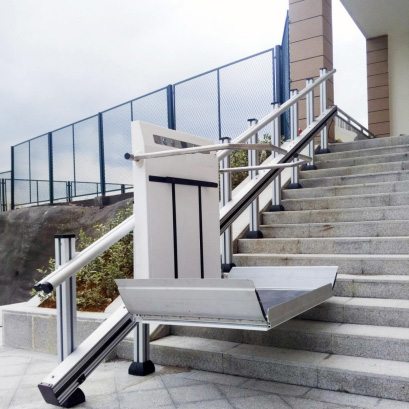
When selecting an inclined wheelchair lift, several design considerations come into play. The type of staircase—straight, curved, or spiral—dictates the lift’s design, as curved staircases require custom-built lifts to fit the contour. Weight capacity is another critical factor, with most models capable of supporting between 300 and 500 pounds, ensuring they can accommodate standard wheelchairs and users. Weather resistance is important for outdoor installations, with lifts featuring durable materials and protective coatings to withstand rain, snow, and extreme temperatures.
One of the key benefits of inclined wheelchair lifts is their cost-effectiveness compared to vertical lifts or elevators. They require minimal structural changes, reducing installation time and expenses. For facility managers, this means improving accessibility without disrupting daily operations or incurring excessive costs. For users, these lifts offer greater independence, allowing them to move between floors without relying on others, which boosts confidence and quality of life. Additionally, their compact design ensures they do not take up excessive space in stairwells, preserving the original layout of the building.
Maintenance is an important aspect of ensuring the longevity and safety of inclined wheelchair lifts. Regular inspections should check for wear and tear on moving parts, such as gears, belts, and sensors. Cleaning the platform and tracks to remove debris prevents malfunctions, while lubrication of mechanical components ensures smooth operation. It is also essential to follow manufacturer guidelines for maintenance and have the lift serviced by qualified professionals to address any issues promptly.