
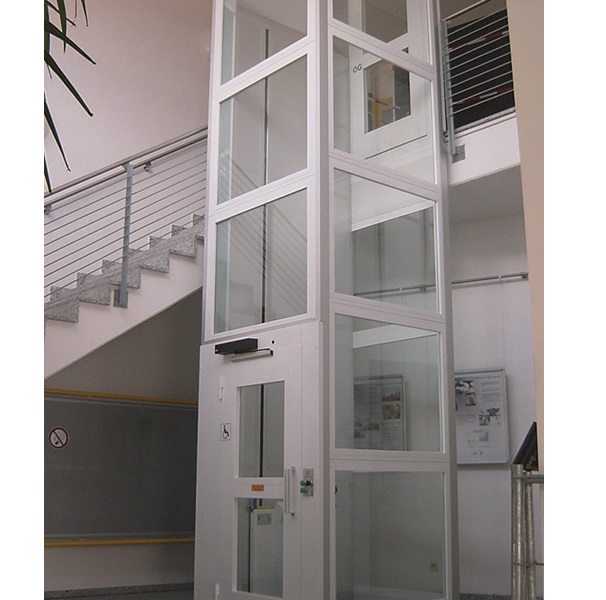
In the vertical passage equipment system, the Hoistway Vertical Platform Lifts are core equipment designed specifically for barrier free passage, cargo transportation, and special scenario requirements. Compared with traditional elevators, it does not require complex car structures and uses open or semi open platforms as the core load-bearing components. It achieves vertical lifting through the drive system in the shaft, and has significant advantages such as flexible installation, small space occupation, and strong adaptability. Whether it is the barrier free renovation of commercial buildings, the transportation of goods in industrial plants, or the upgrading of vertical traffic in old buildings, Hoistway Vertical Platform Lifts can provide efficient and reliable traffic support, becoming an indispensable vertical transportation solution in modern architecture and industrial scenes.
The core design philosophy of the vertical lifting platform in a well is to achieve safe and efficient vertical movement within a limited space. Its basic structure includes a load-bearing platform, lifting mechanism, guiding system, and safety protection device. Operating in pre built enclosed or semi enclosed shafts, the platform is driven vertically up and down along the guide rails of the shaft wall through precision mechanical or hydraulic systems, ensuring a smooth and quiet process. Compared to ordinary elevators that have higher requirements for building structures, this type of platform, due to its modular design and smaller load requirements, can more flexibly adapt to the renovation of existing buildings or the specific area planning of new buildings. It often plays a key role in places such as libraries, schools, hospitals, and historical buildings that have special requirements for space and function.
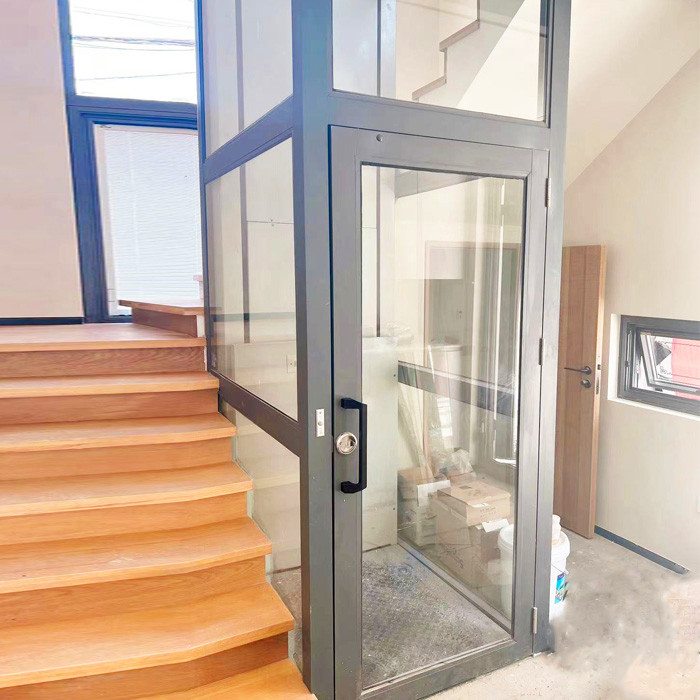
Shaft design is one of the core features of Hoistway Vertical Platform Lifts, and its shaft structure can be flexibly customized according to the installation environment, including various types such as concrete shafts and steel structure shafts. Concrete shafts are suitable for newly-built buildings. By synchronously constructing with the main structure of the building, the overall strength and stability of the shaft are ensured, and it is suitable for long-term high-frequency operation needs; Steel structure shafts are more suitable for the renovation of old buildings or temporary traffic needs, with the advantages of short installation cycle and detachable relocation. They can be quickly built through bolt connections and other methods without damaging the original building structure. The interior of the well also needs to be equipped with safety components such as protective fences and anti fall devices. The height of the protective fence is usually not less than 1.2 meters to prevent personnel or objects from falling from the edge of the platform. The anti fall device can quickly lock the platform onto the guide rail when the drive system fails, avoiding falling accidents.
Safety performance is the core consideration in the design and application of Hoistway Vertical Platform Lifts, and its safety assurance system covers multiple levels such as mechanical protection and electrical control. In addition to basic fall prevention devices and protective fences, the platform is also equipped with multiple safety devices such as emergency stop buttons, overload protection, and limit switches. The overload protection device can monitor the platform’s load-bearing capacity in real time. When the rated load is exceeded, the lifting power supply is immediately cut off to prevent equipment failure caused by overload; Limit switches are installed at the top and bottom of the shaft to precisely control the lifting stroke of the platform and prevent it from operating beyond the safe range. At the same time, the design and manufacturing of all Hoistway Vertical Platform Lifts must comply with relevant industry standards to ensure safety performance meets usage requirements.
With the development of technology, new innovative concepts are constantly being integrated into the vertical lifting platform of the shaft. The intelligent control system makes the platform run more energy-efficient, and the programmable logic controller can adjust the standby mode according to the frequency of use in different periods. Humanized design is reflected in the simplification of the operating interface, with large-sized buttons, voice prompts, and braille markings making it easy for various users to operate. Modular structural design simplifies the installation and maintenance process, and many systems achieve rapid on-site assembly, minimizing interference with daily building use. More advanced guidance and driving technologies continue to reduce operating noise, allowing the platform to integrate into places that require quiet environments.
The existence of vertical lifting platforms in shafts reminds us that the significance of technological progress lies not only in creating magnificent engineering miracles, but also in solving concrete and subtle life problems. In this vertical city of architecture, they are like humble ferryman, connecting different heights, bridging the differences in abilities, and making the boundaries of space soft and approachable. In future architectural design and renovation, such devices will continue to evolve in a smarter, more energy-efficient, and more humane way, safeguarding the dignity and rights of everyone to move freely in vertical spaces.